Author: Deniz Seyrek

GOKARNA – ALLEPPEY – VARKALA

In the previous month I passed through many arid landscapes and the desert in the scorching heat. Then time had come for me to reach the ocean. Now I am going to take you to the magnificent western shores of mother India. To Gokarna, Alleppey and Varkala.

I set off from Hampi in the direction of the ocean. My route first took me to Gokarna through scenic winding roads, with rocky mountains on one side and the Arabian sea on the other. It is a small temple town on the western coast of India in Karnataka state.

Karnataka’s (and maybe also India’s) best beaches are located in Gokarna. It attracts many people for a chilled-out holiday as it’s beaches are calm and peaceful and not as corrupted as Goa that keeps on featuring full-scale crazy parties.

Gokarna main beach is in town, it is quite long and famous for surfing. But I chose Kudle beach to stay that is reached by half an hour walk from the town. You can also use rickshaw. Most accommodation is in bamboo huts along the blissful coast. The view from my balcony was purely amazing. (above)

The calm and remote beaches were perfect for having long meditative walks. It was not the touristy season so there were so few people around whom were long-term travellers like me. Calm and tranquil beaches were exactly what I was looking forward to meet.

Kudle and Om beaches are around 6 km from Gokarna town and are accessible by rickshaw or foot. But Half moon and Paradise beaches are beyond Om beach and are accessible only by trekking or boat. You can hike in between these beaches and enjoy different qualities of each shore.

The surrounding was so quiet and peaceful. I was sharing the long beautiful beaches with few people -mostly fisherman- and with some cows and dogs. Adorable birds, crabs and iguanas were coming over once in a while.
It is not easy to forget that morning when I could be able to overcome a serious situation in the sea. I was enjoying to start my day early with swimming. That morning while swimming I didn’t realize how further I moved away from the shore. So as I wanted to return back, I saw that the waves were throwing me away. No matter how much I tried and struggled, it was not working. I am a quite good swimmer but the waves of the ocean were different from the seas I come from. There was no one at the beach that I could ask help from. Then a great fear arised and a massive strength. I swam with all of the power of my body and breath.
Eventually I made it to the shore. Then I learned that in this kind of a situation one has to swim parallel to the shore first, then overcome the current, and then swim to the beach. Ahh what an experience it was. Death can come any time.

Gokarna town has a laid-back, unspoiled and rustic nature. The colourful markets, little inner roads are perfect places to witness its vibe. There are two faces of Gokarna. For international travellers it is a succession of spectacular sandy beaches. But for most Indian visitors Gokarna is a sacred pilgrimage town of ancient temples.
Gokarna is known as one of the seven important Hindu pilgrimage centers. Therefore large numbers of devotees visit Gokarna every year to offer prayers and worship to Lord Shiva. Mahaganapati temple and Mahabaleshwara temple are the most important religious Hindu destinations here. Unfortunately foreigners are not allowed to enter inside.
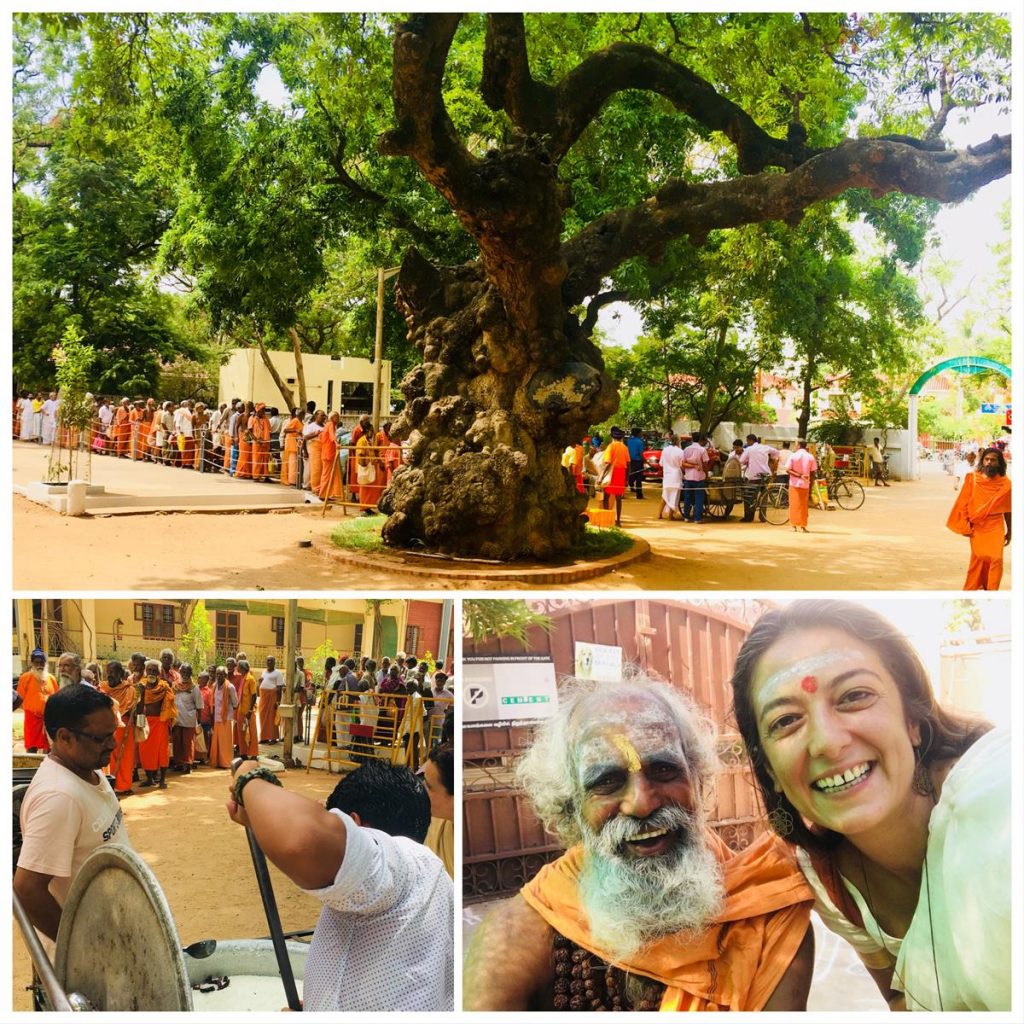
One of the greatest gift of Gokarna was my encounter with this man above. He is Babak. He was born into an Iranian family, lived most of his life in Canada, now he is living mostly in India and now and then in Sri Lanka. The main reason that makes him stay in Gokarna is its holy energy. He is a beautiful soul who had settled his life in the path of discovering the truth, his real nature.
The moment we met is vivid in my memories. I clearly remember how I hugged him and couldn’t help myself but cry in the very first minute of our meeting. It was as if my heart felt right away that this was a great connection. Since then he kept on impressing me with his maturity, his perspective and devotion. He became a source of inspiration for me and supported me greatly. I am so thankful for his presence, his friendship. Travelling also brings these kind of precious gifts into your life.

As coming to the southern parts of India the diversity of fruits go crazy. So my main diet started to include mostly the fruits. Papaya, mango, banana ve jackfruit, mangosteen, passion fruit, rambutan, avocado… All are so fresh, delicious and nutritious.

Speaking of food, let me tell about the rich Indian cuisine that varies due to the region, climate and ethnicity. There are so many different recipes of this rich cuisine in which the spices are the most essential ingredients. In time you learn how to distinguish the diversed flavours. Garam masala is maybe the most common blend of spices like fennel, pepper, clove, cinnamon, cardamom, cumin, coriander and curry leaf.
Curry is a wide variety of dishes prepared with different vegetables in a sauce with a combination of spices and herbs. Mainly you will see red, green, yellow curries. Coconut milk and oil is used mostly in the southern regions. We can say that the most common vegetarian recipes are these: Palak paneer is a thick paste made from spinach that consists of paneer (Indian cheese). Aloo mutter is made from potatoes and peas in a spiced creamy tomato based sauce. And sambar is a lentil based vegetable dish.
Chutney is the main side dish that has so many varieties in different parts of the country. It is a kind of sauce made from fruits, vegetables or herbs with vinegar, sugar and spices. It is used to provide balance to the dishes and highlights a specific flavour.
Rice is like a must, a main element of the meals. If you are not a fan of rice like me, don’t worry. India has a rich variety of breads. Chapati, paratha, roti and naan are different types of round oven baked flat breads. Puri is also another type of bread that is prepared by deep frying. Dosa is a cooked flat thin layered rice batter that is somehow similar to a crepe in appearance but way more thinner. I love Idli that is a rice cake, oftenly eaten during the breakfast in south.

I was so pleased to reach the ocean during the intense inner process I was going through. Ocean enabled me to relieve myself with its freshness. I swam, played with the waves, gazed at its vastness, breath its smell, cooled myself with its soft breeze. The spectacular sky was always amazing me, magnificent blue colours were changing into a blend of orange, pink and purple during the sunset. I was relaxing and feeling more balanced in the mother nature’s compassionate embrace.
My mind was continuing on testing me. And I was keeping on watching the stream of mental events just like watching a movie on the screen, without attaching or resisting to any of them. Psychological aspect of my ego was gradually purifying. Just so recently I was totally lost in the deep and darkest sides of my psyche. But then the great energies evoked in my heart and taught me how to overcome this turbulance by the guidance of love. This wasn’t a bunch of words in a teaching any more. I realized it through my direct experience that sealed the way out in my consciousness. I was feeling that a solid transformation was manifesting itself in every sense. I was in deep gratitude. (To get to know about the integrity of my story and my inner process that leaded me to this state step by step, you can check the previous essays of my India journey)

I was feeling that a deeper connection and communication was unfolding between my consciousness and the sacred flow of the universe. I was hearing a deep inner call, feeling a deep sense that was quite new but so familiar at the same time. That was inviting me, pulling me towards itself with a great magnetism for merging, for recognition of the reality. I was the drop in the ocean, becoming, being the ocean.
My dear teacher Adyashanti’s words were so much describing what I was going through these days:
“Many people who have deeply engaged in their spiritual journey may have moments where they wonder, ‘Wow, what did I get involved in?’ At the beginning of the journey, it feels like you are chasing the truth. But once the truth is chasing you, you realize the reins of your life are no longer in your ego’s hands. Some other force is now commanding your spiritual journey and your life has given way to a new, transforming force, the force of spirit and fire. And spirit and fire are not predictable, you cannot control them.”

Then I set off from Gokarna and reached my next destination Alleppey in 21 hours. Travelling in India is just like that, taking too long times. It is sometimes a test of patience, sometimes a break to rest or an opportunity to witness the change in the landscapes. It is the perfect place to meet people, listen stories, observe the Indian vibe. Every experience is unique in this sense.

Alleppey (also known as Alappuzha) is located by the Arabian sea in Kerala state in southwest India. The population is a mixture of Hindus, Christians and Muslims. The most widely spoken language is Malayalam. In 2016, it was rated as the cleanest town in India and it is so easy to see this change when you arrive here.
This region was an important spice trading centre from the 14th century onward. It was occupied by the Portuguese first then by Dutch and British and remained as an European colony for some centuries. I find it quite interesting to learn that the main reason for these countries to come here was nothing but the spice! You can still read the colonial influence on the architecture of old buildings. The lighthouse (above) offers great views of the city from above.

Alleppey’s main beach is 2km west of the city centre. It has so big waves and strong currents that makes swimming dangerous. But it is a perfect place to hang around and watch hundreds of Indians enjoying the beach. I was still taking the advantage of travelling in the off-season as there was not even one tourist around.

The beach had an enormous open angle of 180 degrees. All I saw was the spacious ocean in front of me. At the direction of my view, the nearest land was southern parts of Africa which was thousands of miles away. Rainy season brought many clouds that were creating a highly dramatic view. And the sunsets were breathtaking with a blend of many colours in the sky.

The main reason that brought me here was the backwaters. The backwaters of Alleppey is the most highlighted attractions in Kerala that makes it a magnificent settlement with many crisscrossed canals. In the area six major rivers form the backwaters and join the 80 km coast line of the district.
There are over a thousand houseboats in these backwaters. You can book one and stay overnight while going slowly along the waterways. But if you are a budget traveller you can use public transport.

Or you can hire cheap little boats like me and wander in between the little canals as the way you wish. This journey takes you into a watery world of villages. One of the important feature of the area is the region called Kuttanad that is known as the rice bowl of whole Kerala state. Therefore the major occupation of the town is farming. It is one of the few places in the world where farming is done below sea level. The backwaters and wetlands host thousands of migrant birds every year that reach here from long distances. And there is abundance of marine life.

It is a unique experience to explore this area that is home to a vast network of waterways. You get so amazed by the magnificent green colours of nature around you. The tropical outlook is so peaceful with many palm and coconut trees.
I so much enjoyed to wander around the little villages and stop at some points to discover more. At one spot I found a humble place that offers food. This was the first time I experienced the traditional south Indian way of serving food on banana leaves. They put the leaves in front of you, then you wash the leaves with some water. And then they begin serving one by one a wide variety of different food; salty types, sweet types, chutneys, amazing mango pickles and of course rice. It is exactly a feast of different flavours and spices. Service keeps on going until you say that it is enough.

I went on a day trip to Varkala and Kovalam that are in the southern parts of Alleppey. It was raining cats and dogs and I love the monsoon. I guess I have experienced the most extreme rains here. The lightnings were so massive that it was making me feel scared even.

The views above show the beautiful beaches of Varkala.

Today was my birthday. Completing 39 years in this life, I was floating on this silent backwaters, in inner peace and gratitude. Here and now…
Watch out what you wish for, what you intend, what you call into your life. Because they come true, they become reality. I remembered my last birthday which felt like, that was years ago. (Travelling stretches the perception of time.) It came to my mind that on that day I wished for inner freedom.
Myths have been unfolding since then, giving me the gifts of many realizations and chance to understand how to create a meaningful life. At the end, I am grateful to have LOVE as my highest inspiration ever. Loving unconditionally opens in the heart, the peace, compassion and wisdom. Inner freedom is my reward now.

Thank you to all the beautiful beings who were there to help me realize myself, who visibly or unvisibly guided my steps on my pilgrimage on the road of love. Thank you mother nature, the sun and the moon for creating the most beautiful home for me where I taste the immeasurable joy.

I am Love.

MUNNAR – KODAIKANAL

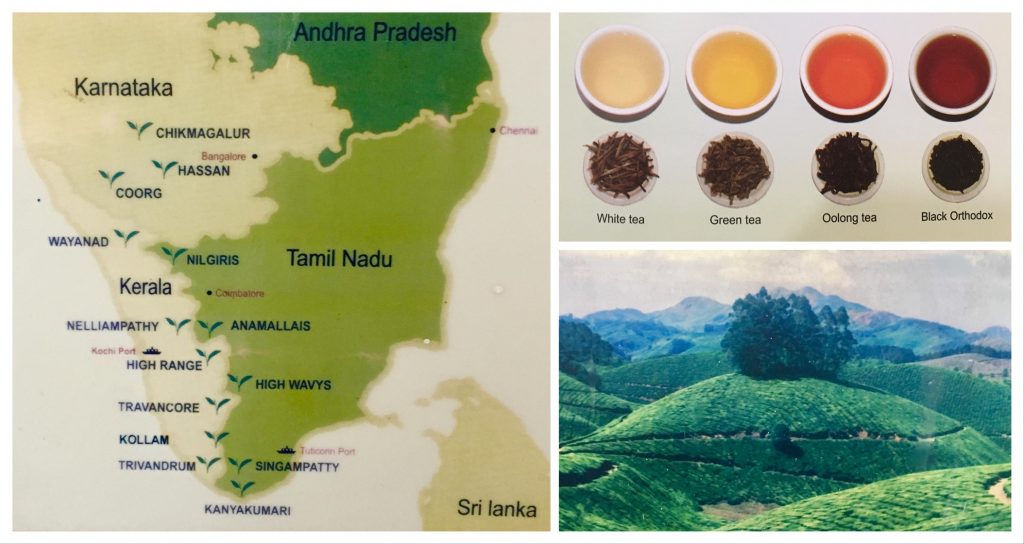
After travelling in the southwest coasts of India I turned my direction to east and headed to the magnificent mountainous regions of Kerala and Tamil Nadu states. This essay will take you to my days in two different hill stations; Munnar and Kodaikanal. You can see their location on the map above.

Munnar is a town and hill station in Kerala state in southwest of India. The altitude of the region varies between 1.450m and 2.700m above sea level. After being by the ocean in the southwest coast, it was a great change to be in the mountains now. Mother India is magnificent in this sense. Landscapes change dramatically from one region to another.

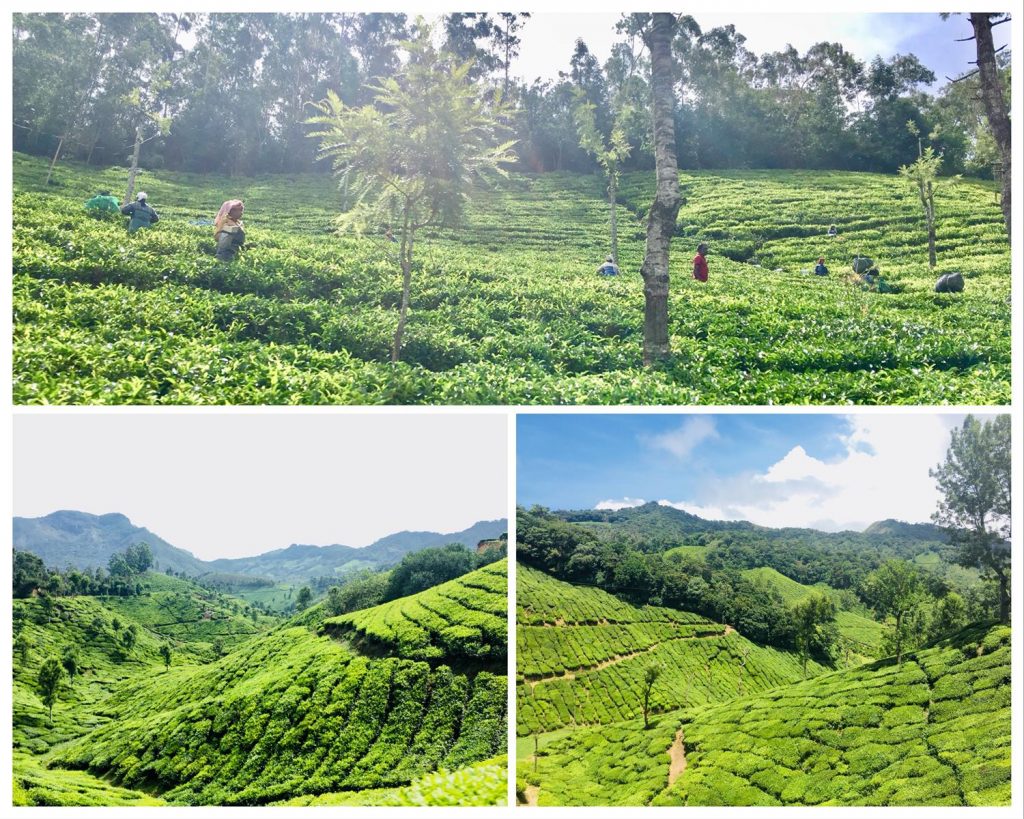
Munnar’s top attraction is its surrounding countryside with huge areas of tea plantations. The hills here are south India’s largest tea-growing region. Munnar also has protected areas which are home to many endemic plant species.

You can make a deal with an auto rickshaw (three wheeled passanger cart) for a half or full day ride around the hills. You will be going up and down in the winding roads inbetween picturesque hills of tea plantations and seeing people working in the fields here and there.
Kerala is the home of Ayurveda that is a traditional Indian medicine based on plants. The region is blessed with an ideal tropical climate and landscape with forests and mountains where many herbs and medicinal plants grow on their own in abundance. You can visit the Spice Park near the town and take a tour around many types of ayurvedic plants and see them closely. It may be the best spot to buy some India tea and spices.

Map above shows the tea growing areas in south India.
There is a well designed Tea Museum near the town that gives you somes idea about the history of the plantations that dates back to the 1880s, first started by British people. It also displays the basic process of tea cultivation and production. Based on the type of manufacturing process, teas in general are classified into three types; black, green and white tea. I was so surprised when I learned that tea plant is in fact a tree. The tree you see above is a typical tea tree that hasn’t been pruned and left for its natural growth. But pruning is inevitable to keep the bushes at a manageable height for effective plucking.

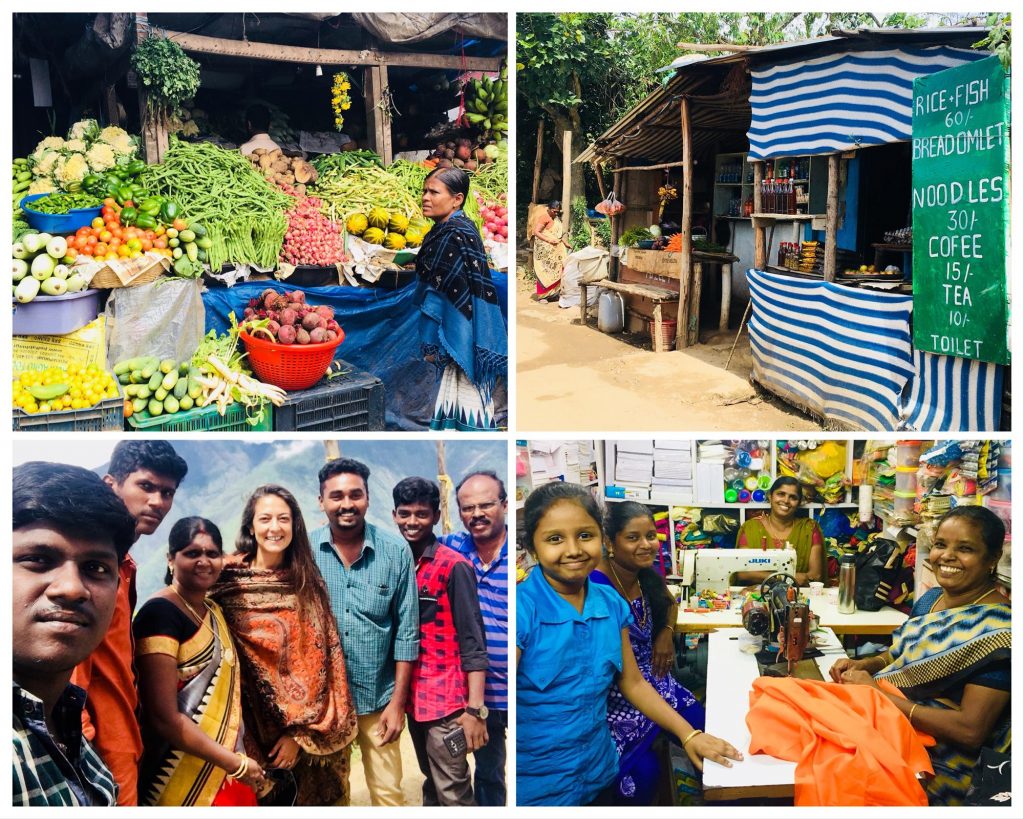
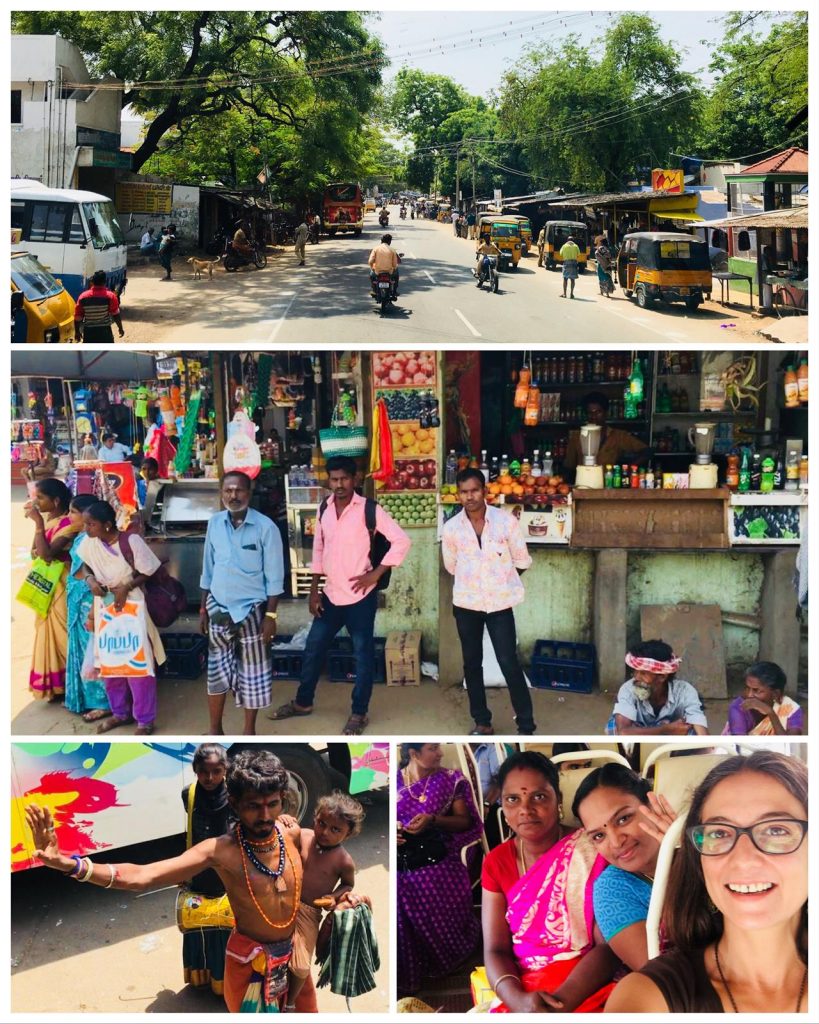
Munnar town itself is typically Indian with the usual colourful markets. I like to give a break at the little stalls to drink Indian chai (tea with milk, sugar, ginger and some spices) There is something about south Indian people. I guess they are the most welcoming and warm hearted people in India. I adore their sincere smiles. Indian people like to take selfies with the foreigners and do not hesitate to ask you if it is ok to have a selfie together. This time I took this chance to have the memory of these beautiful people.

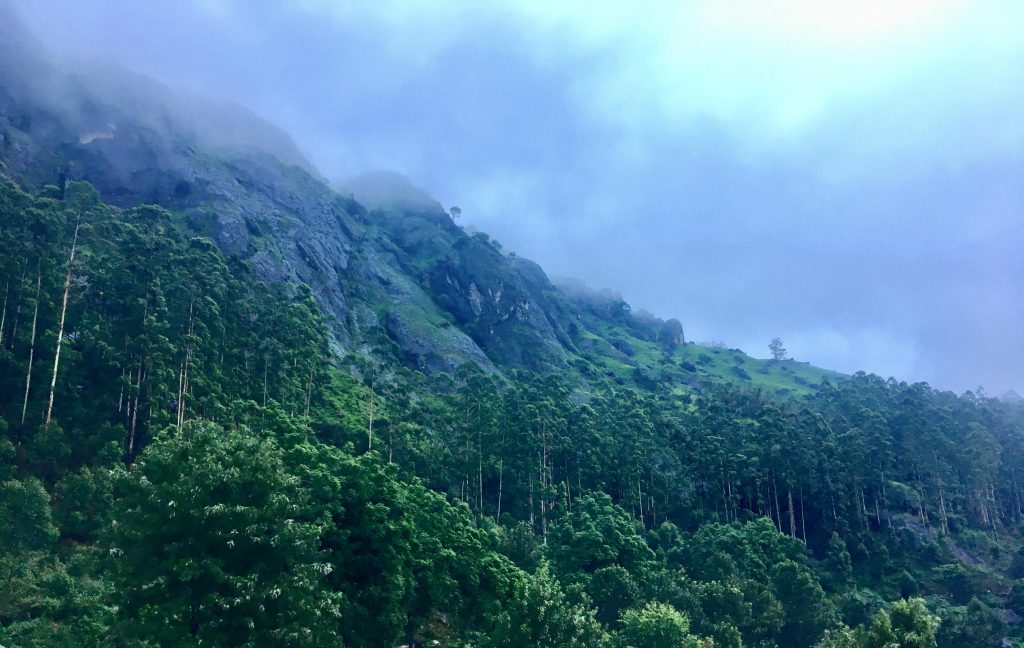
One day I took the public bus and went to the Top Station of Munnar that is around 40km away from the town. The roads first take you through the hills decorated with tea plantations and then you reach a spectacular forested area with some lakes. Almost everday is rainy in this season but today it didn’t rain even for once. I felt lucky as the clouds left the views open for me and I enjoyed the sun and magnificent sceneries.

There are 4 wild life conservation areas in the region. At some points you pass through elephant crossing zones. Once more I was lucky that I could be able to see these wild elephants walking through the hills.

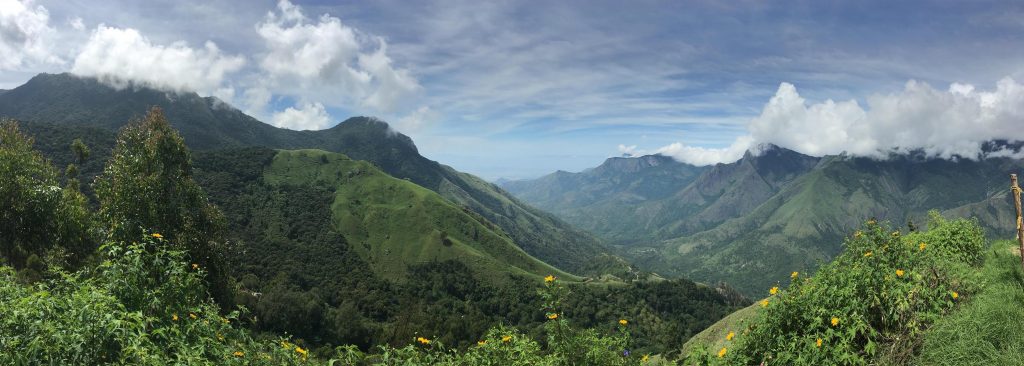
The gorgeous view above is from the Top Station of Munnar that is at the altitude of 1700m. It is on the border of Kerala and Tamil Nadu states and offers a clear panoramic view of the mountains and valleys. I got totally intoxicated by this pure beauty at first sight.

Breathing in these magnificent mountains, at the same time I was carrying a precious feeling in my heart that was special for this day. This day last year my dear cat, my beloved girl ‘Iizi’ passed away from this life. She was my companion for the last 12 years. We had lived all of these years side by side and be there for the other one at the times of pain, happiness, illness, grief, joy, excitement, whatever our lives brought to us. It was a manifestation of a great friendship in between two different species. She had been a great teacher in my life who showed me the meaning of unconditional love and compassion. She had a little body but a great pure loving heart.
My dear girl, I remember you everyday, how you look, talk, walk, your craziness, your maturity, how peacefully you sleep, the moments we rest in each other’s arms. I feel our love everyday. We can never be apart. I am with you, you are with me in each breath. I love you limitlessly. With a loving smile on my face I am giving a kiss to that little cute nose of you.

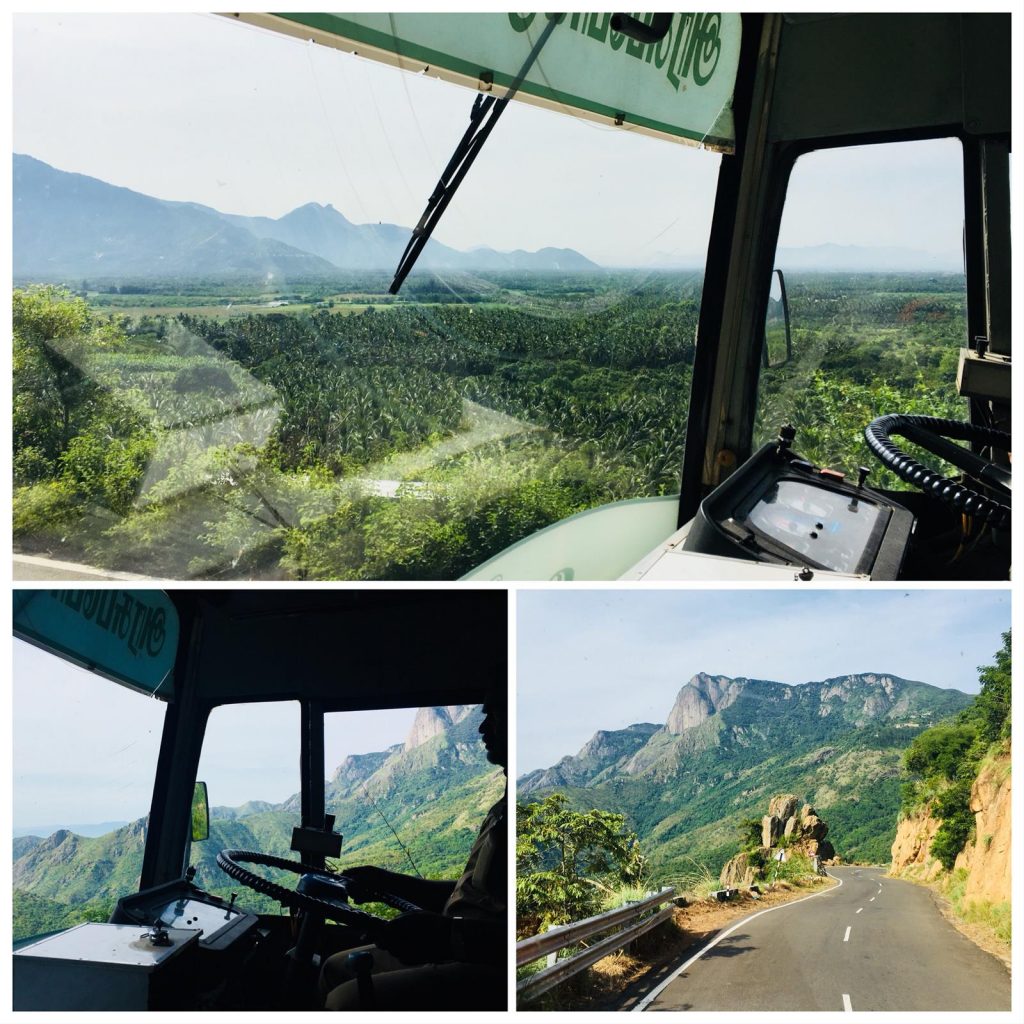
Then I left Munnar at an early morning with the intention to go to my next destination through the mountainous regions. This excitement of mine resulted with an 8 hour journey in which I changed 4 buses for the total distance of just 180km. While leaving Munnar behind, the clouds were covering the hills creating a tranquil scenery.

Taking the front seat was a good idea as the roads were so winding that could easily make you sick. We covered a magnificent area, first through the hills of tea plantations then through the valleys of dense forests.

Then we proceeded through the huge fields of palm trees and cardamom plantations. I enjoyed each moment in this journey that was full of tropical sceneries. Then the descend finished and I reached the lowlands. I passed through some villages and towns here.

The bus terminal of the little town Vethalakundu was like a circus. Hundreds of people were waiting for their bus where there was no proper schedule at all. Extremely loud Indian musics were seperately booming from each and every old bus from 60s or 70s. Urine smell was in the air. There were many food sellers and transvestites beggers. I observed that transvestites were respected here, most of the people were giving them money. It was so strange to see this man above, trying to collect money by performing a strange show. With a whip he was constantly hitting himself like crazy. Some parts of his body were bleeding. I was sorry for his 2 year daughter who had to witness this cruel oddity. All this was like a film set. In between this chaos I relaxed myself with the friendship of two Indian ladies sitting behind me.

Then with the last bus, I climbed up another mountain range. The winding road passed through beautiful valleys, some lakes and some giant waterfalls. Now I was in another state, Tamil Nadu for the first time. Soon I reached my destination, Kodaikanal.

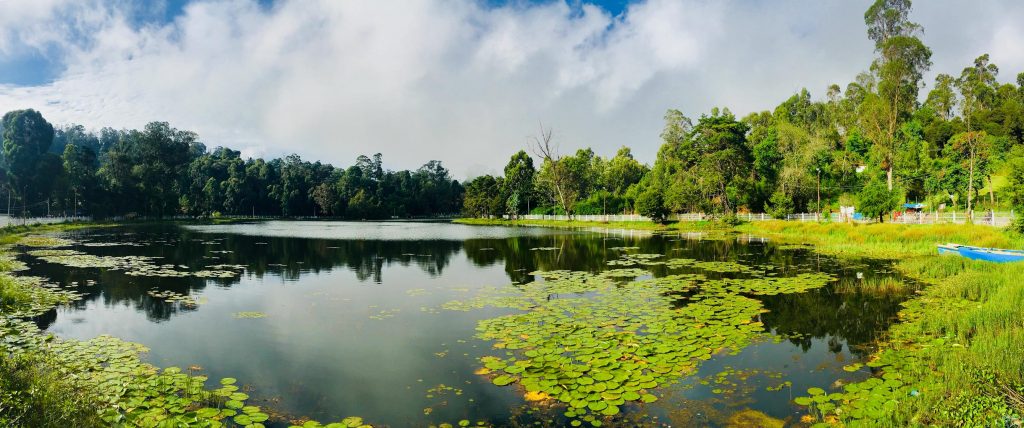
Kodaikanal is a hill station at the altitude of 2130m in west parts of Tamil Nadu state. It is unfortunately a densely built-up town with many hotels mainly because of the domestic tourists that visit here frequently. But the lake in the center of the town offers a peaceful environment. The 5 km path around the lake is a beautiful walk. Water lilies look so charming.

I found a beautiful guesthouse at the end of the town, away from all that dense settlement. I was so lucky again to find a place that had an amazing scenery (above). Day and night I spent plenty of time sitting here watching the breathtaking valley in front of me. I also met so many beautiful people here, some of them Indians, some of them long term foreign travelers like me.
Kodaikanal is known for its rich flora. Big trees like cypress, eucalyptus and acacia are the dominant varieties. Competing with the fruit trees are the flowering ones, mainly rhododendron and magnolia.

A few kilometers away from Kodaikanal there is a small village named Vattakanal. Almost everyday I walked the peaceful path between these two spots that offers spectacular viewpoints opening to different directions of the mountains. To see the mountains lining one after another was so impressive.

There are some mighty rocks that lie above the valleys. One of them is the Dolphin’s Nose (above) that is a flat rock which has a magnificent view of many hills and valleys. It is reached by a 4.5km trail from Kodaikanal. There are also some cascading streams and high waterfalls in the area.

Kodaikanal has a monsoon influenced subtropical highland climate. The temperatures are cool throughout the year due to the high elevation of the town. The rain was frequently bringing fog with itself. One day with the people I met at the guesthouse, we went on a hike in another direction of the area. It was raining like cats and dogs and the mountain paths were filled with water that brought many leeches to our feet. We passed through magnificent eucalyptus forests and diversed jungles.
Another thing that is wellknown for this area is that psilocybin mushrooms grow here in abundance.

I am in deep gratitude for mother nature for opening her compassionate embrace to this solo traveller. I am thankful for the graceful rain that eased and purified my heart. Mountains and forests, how blissfully you hosted me. Thank you with deep respect and love.

SIVANANDA ASHRAM (TRIVANDRUM) – AUROVILLE (PONDICHERRY)

In this essay I am going to take you two different places in South India. First one is the Sivananda Ashram in Neyyar Dam near Trivandrum that is the capital of Kerala state. The second one is Auroville that is an experimental township and community in Pondicherry that is a seaside town by the Indian ocean in Tamil Nadu state in southeast India.

Sivananda Ashram is set in a big tropical land in the quiet foothills of west Kerala. The natural beauty of Neyyar Dam lake, the forested surroundings, the green coconut groves offer a beautiful atmosphere to abide in your practice and silence.

There are some tiny little villages so close to the ashram. I was going for walks by the lake, wandering around these villages, watching the men farming, fishing, the women washing cloths near the lake, the children joyfully playing, swimming in the water. I loved the words written on that rickshaw above; ‘The Gift of God’. It made me laugh and respect at the same time.

Sivananda Ashram offers two week yoga programmes that includes daily yoga and meditation sessions, inspiring and informative spiritual teachings on the path of yoga and delicious healthy vegetarian food. This was the programme I attended for two weeks.
The ashram also hosts one of the world-wide known yoga teachers training programmes. It also offers Ayurveda retreats and training programmes. I have met many people who had benefited from the personalised ayurvedic therapies and detoxification programmes called pancha karma.
Ayurveda is a traditional Indian medicine that is practiced to improve well-being, cure certain diseases and strengthen the body. This medicine is based on natural treatments that enable detoxification. Ayurveda originated in India around 5000 years ago and continued to thrive over the centuries especially in Kerala due to its climate and landscape that is home to many medicinal plants.

Sivananda Ashram is a spiritual organisation that follows the lineage of Swami Sivananda Saraswati. (we see him on the left) Swami Sivananda (1887-1963) as a Guru, set a supreme example to many spiritual seekers with his generosity, spirit of service, deep devotion and constant humour. His teachings combined all yoga paths into one which he summed up with ‘Serve, Love, Give, Purify, Meditate, Realise’. He has disciples around the world, of all nationalities, religions, creeds.
The founder of the ashram is Swami Vishnudevananda, disciple of Swami Sivanada Saraswati. (we see him on the right) Sivananda Centers are now in 26 countries and there are four ashrams in India.

I so much benefited from their particular way of yoga practice that was designed by Swami Visnudevananda. I loved the sequence of asanas (postures in yoga practice) that strengthened my body gradually. The daily programme was consisting of 2 yoga sessions, each lasted for 2 hours. They helped me to relax my body and mind.

Those days we were around 80 people in the ashram I guess. The days were starting with meditation and daily chantings. The programme does not require silence but the food was eaten in silence. Depending on your task you are also involved in karma yoga to help in daily works of the ashram like cleaning and serving the food. There were also afternoon lectures on the philosophy of Yogic Tradition which gave me ideas about it. My body and mind benefited from the daily routine here.
At the breaks after the breakfast it was nice to go out and enjoy the surrounding. We were also meeting with friends at the chai shop close by. The lady above who was running this little and humble chai shop was adorable. She was a typical Kerala woman with her beauty, kindness and warm heart.

One night I attended a religious ritual in the village with the whole group of people in the ashram. It was an extraordinary ceremony that takes place once in a year. First the cortege of hundreds of people walk through the village. All the young man are prepared in a special way with many metals pinned on their body. It was looking so bizarre. They looked like they were in trance.
Their Guru blesses the area first and starts the ceremony. Local musicians perform so high volume crazy upbeat music. Before this night the young men of the village go into fasting for 41 days. The man whose name comes from the sweepstake becomes that year’s lucky one to perform the ritual. His task is to show his devotion by dancing barefoot on the embers at the ritual area. What an unusual tradition it was.

This was also the place where I gave time to collect information about the Gods and Goddesses of Hindu mythology and belief. These deities have distinct and complex personalities, yet are often viewed as aspects of the same Ultimate Reality called Brahman. Vedic Era, Yoga school of Hinduism and Advaita school of Hinduism take each symbol differently but overall they represent both the forces of nature and the moral values, virtues and vices of human. Each deity controls a particular energy. These energies, present in the person as wild forces that must be controlled and canalized fruitfully to infuse a divine consciousness. In a person’s path of spiritual progress, he or she needs to develop the various attributes of these godheads in him or her to attain all-round spiritual perfection.
The Gods in the holy trinity are; Brahma the creator, Shiva the destoyer, Vishnu the preserver. The Goddesses in the holy trinity are: Lakshmi that represents abundance and fortune, Saraswati that represents knowledge, music, art, wisdom, and learning, Parvati that represents fertility, love, beauty, marriage, children, and devotion. Krishna is the God of compassion, tenderness and love, Ganesha is the remover of obstacles, Hanuman is the ideal combination of strength, heroism, overconfident excellence and devotion. Durga is the mother goddess that protects the power of good over evil. Khali is the mother of the universe that presents liberation.

Couple of weeks ago on my birthday I intended to make a ceremony soon to welcome the great opening in my life. The ones who had read my previous days in India would know about the inner transformative process I have gone through. Here was the perfect place to do this ceremony. On the full moon day I offered two trees –mango and papaya- to mother nature and planted them at the land of the ashram. This inner opening was a turning point that I honoured deeply in my heart.
A sudden unexpected staggering experience came into my life about 5 months ago. Since then I was so many times tested by my ego that kept on rising from the depths of my psyche. It was the phase of destruction of the old, of the lower self that eventually opened the space for the new to be borned or reborned. Rising realizations enabled a life that is more balanced, more conscious, intuitive, insightful, calm, humble, joyful, loving, compassionate and free. I was softening and strengthening at the same time. This was a state of being which I cherish, protect, intend to preserve and deepen with devotion. It is purely sacred.

“Never lose hope if the Beloved pushes you away, if He shuts the door on you. Don’t go, be patient and wait! It is your patience that will draw Him back. If He blocks all your roads, be sure He will show you a secret way unknown to others.”

Now I am going to take you to the southeast coast of India to Pondicherry which is a seaside town by the Indian ocean in Tamil Nadu state. After all the hustle and bustle of typical Indian towns and cities Pondicherry was way more different in terms of its cleanness and quietness. We see the old town in the picture up here (above) that has colonial-era vibe in its architecture style because Pondicherry was a French colony until 1954. Some people still speak French but Tamil is the official language used region wise. The internationally famous Sri Aurobindo Ashram is here.

On the other side newer town is typically South Indian. Visiting the colourful markets was a feast to the eye.

The reason that took me here was to visit Auroville that is 12 km northwest of Pondicherry. Auroville is an experimental township that has been declared as autonomous by Indian Government. It attracts large numbers of spiritually minded visitors from all over the world.
It was founded in 1968 by Mirra Alfassa (above), also known as ‘the Mother’. She was a spiritual guru who influenced and inspired many writers and spiritual personalities on the subject of Integral Yoga. Sri Aurobindo (above) was an Indian philosopher, yogi, guru and poet. He was the collaborator of Mirra Alfassa. It is known that they have influenced each other greatly.
Mirra Alfassa’s first public message tells clearly about the vision of Auroville: “Auroville wants to be a universal town where men and women of all countries are able to live in peace and progressive harmony, above all creeds, all politics and all nationalities. The purpose of Auroville is to realize human unity.”

I found this drawing of the Mother so meaningful. (above) She made this drawing to explain to a child the meaning of Yoga. Man is at the bottom, the Divine is at the top. The wavy line is the path of the ordinary life, the straight line is the path of Yoga.

The whole area of Auroville is located in 20km2 of barren wasteland. In its center it has Matrimandir. (I will tell about it down below) Radiating from this center are four zones: Residential Zone, Industrial Zone, Cultural & Educational Zone and International Zone. Around the city plan, lies a Green Belt which is an environmental research and resource area and includes farms and forestries, a botanical garden, seed bank, medicinal and herbal plants, water catchment bunds and some communities.

Dear Laura was my host here. She was living and volunteering here to be a Aurovillean soon. Building communities was one of my interests in my past so I asked her all I wanted to learn about the structure of the community. Auroville hosts around 3000 residents now. There is no personal ownership and it consists of many small communities that live on their unique structures. She took me to some little communities where I met some Aurovilleans. To go here and there with the motorcycle gave me the chance to see many parts of the whole settlement. The pioneers that came here in the beginning of 70s planted around 3 million trees here. It was amazing to see the forested areas that were once barren landscapes. What a dramatic change in 50 years. This jungle is now home to many animals. There are 22 known species of snakes living in the area. I also paid a visit to ‘Solitude Farm’ that is run by permaculture principles. The diversity they created here was impressive. We swoped heirloom seeds with Krishna that is the founder of the farm.

I also spent some time in the neighborhood and wandered around in the small humble villages where mainly Tamil people reside. As always children are adorable giving me an immense life energy.

Matrimandir is the heart of whole Auroville and it is a must visit place if you come here. It was envisioned by the Mother as “a symbol of the Divine’s answer to man’s aspiration for perfection”. The entire area surrounding the Matrimandir is called the Peace area. Inside the complex, a spiraling ramp leads upwards to a chamber of polished white marble referred to as “the place to find one’s consciousness”. This is the place where you are invited to meditate. Silence is maintained inside to ensure the tranquility of the space. If you want to meditate inside, you must reserve one to six days ahead, in person, at Auroville’s Matrimandir Access Office.
Visiting this unique space offers a glimpse into an utopia. As being a former architect who was educated in the modernist perspective, I found the complex highly impressive. It is a great example of Brutalist architecture that is characterised by massive and monolithic appearance with rigid geometric style and large-scale use of poured concrete. Being in this environment I felt like I was in the movie of Kubrick, 2001 Space Odyssey.
After many years now I have totally a different taste in life, not modernist but naturalistic I can say. So I found the vibe inside Matrimandir quite dry and cold. Anyway this does not matter when you sit for meditation.
It was not allowed to take pictures inside so I took the photos above from a book.

After a few days in Auroville I was now ready to hit the road again for my next destination.

TIRUVANNAMALAI PART I

Each moment, each step and breath is precious in my travels but the days in Tiruvannamalai were way more special I must say. This is the place where a remarkable revolution had manifested itself in my spiritual path. The significance of what I have come across here is priceless, it is beyond words. Without really knowing what a wise spirit it is, an energy somehow leaded me to here. I didn’t question at all, with no hesitation, with no doubt I came here. It was totally intuitive. Then I understood it was the call of Ramana and Arunachala. It was a pure blessing to be in this powerful place for a month and complete my beloved India journey here.
I am now welcoming you to one of the most precious jewels on earth.

Tiruvannamalai is a temple town and a major pilgrimage center in Tamil Nadu state in southeast India. Therefore the town hosts some important ashrams and attracts ever-growing numbers of spiritual-minded travellers. Annamalaiyar Temple (above) is one of the most prominent landmarks of Tiruvannamalai. The temple complex is one of the largest Hindu temples in India. Its oldest parts date back to the 9th century.

The most remarkable reason that makes Tiruvannamalai so holy to Hindus is that it hosts mount Arunachala. It is a 800m high volcano that is the heart of Tiru or even the heart of the whole world for some people due to the immense magnetic energy it holds. Hindus believe that Arunachala is Lord Shiva himself whereas holy places like Mount Kailash, Varanasi, Rishikesh are just residences of him. Arunachala means ‘Hill of Fire’. Fire stands for Jnana (self-knowledge / wisdom).
Shiva is one of the 3 principal Gods of Hinduism. He is an aspect of God’s nature, named as the destroyer that shapes everything accordingly through the will of infinite pure consciousness. Shiva destroys our imperfections to ensure our spiritual progress. He destroys our illusions, desires, ignorance, attachments, impurities and many things that stand between us and God (pure consciousness/absolute reality) as obstacles to our progress and inner transformation. Shiva’s destruction is nourishing and in fact constructive. It is like fire, first devours life and then prepares the ground for its renewal.
During my whole journey in Nepal and India, from the very beginning, the destructive energy what Shiva represents has been beside me, bringing into being what I seek for. Ahh, all this inner fire in me which put my ego amidst the flames and burned and burned and burned it. Now I was truely knowing what this was meant to be. Now I was totally understanding why I was pulled here.

Apart from immersing into the great energy of Arunachala, the other profound gift of coming here was to meet Ramana Maharshi and his teachings. Sri Ramana Maharshi (1879-1950) is a South Indian sage who awakened mankind to the practice of self-enquiry as the principal means to remove ignorance and abide in Self-awareness.
So soon I would realize that he was my Root Guru. Guru is the Sanskrit word meaning teacher. In spirituality a Guru is the one who introduce us to the fundamental wisdom. But the Root Guru distinguishes from a Guru through the special connection, an irresistable attraction we feel toward them. When the student is ready, the master appears.

His ashram was the place that set up the suitable environment for me to get to know about him and his teachings. For one month, from early morning till 7 in the evening I was all in the ashram apart from some breaks. Pictures above show the peaceful environment and the accommodations that the ashram provides for you. I stayed in one of these spaces for 10 days then left my place for other devotees and rented a room in the neighborhood.
Ashram’s environment was really so peaceful, neat and clean. Its soft energy welcomed me from the very beginning. I immediately felt home. In the office, dining hall, library or shrines, everywhere, all the people around were so welcoming, helpful, loving and gentle.

I guess we were around 300 people staying in the ashram those days. The picture above shows some of the places at the ashram. First is the common space in front of the shrine that has a well in the center. The second one is the dining hall where the ashram generously serves food and many volunteers offer their selfless service. And the third one is the place of the cows. The deep relationship between Ramana Maharshi and the cow Lakshmi is well-known and since then many cows had been the residents of the ashram.

The building above is the heart of the ashram, it is the shrine of Ramana. It is open all day long and many rituals and ceremonies like pujas (prayers), milk offerings, chantings take place here during the day. How devotional were those evening chants where many women and men were chanting in turns in Tamil language, expressing their devotion and love to Ramana.
People’s clean and elaborate dresses, the offerings with colourful, fragrant, fresh flowers, the incenses used to clean the energies, all were showing the deep respect people have for Ramana and for the space. There was deep peace on each devotee’s face. I was so impressed to see meditation as the core practice amongst each and everyone, women, men, the young ones, the elders. Everyone was introverted. Because the greatest teaching of Ramana is to abide in silence within.
During this whole month I stayed here, I had many chances to speak with the devotees and hear about their experiences. I really loved the way how lovingly they speak about Ramana, how their eyes shine when they feel him. They said each person whose path eventually came here are special souls. Apart from Indians there are also many Westeners here who stay long term. I was so lucky that I met quite a few beautiful people with whom we built sincere friendships.

Each day starts at 6.45 with the milk offering ceremony at the shrine of Ramana. Milk is believed to have purifying qualities and it is a common ritual to offer milk to the lingam that is the symbol of Lord Shiva. During and after this ceremony little Brahmins chant Vedas. Vedas are among the oldest sacred texts in the world that originated in ancient India and have been carefully preserved since then. They are seen as revelations of ancient sages after intense meditation and are considered to be the direct word of the Divine. The underlying teaching of the Vedas is the concept that the individual is not an independent entity but rather a part of the Universal Consciousness.
Brahmins in Hinduism specialise as priests, teachers and protectors of sacred learning across generations. There is a school of these little Brahmins at the ashram. I was preferring to meditate near the shrine at the times of their chantings. They chant in such a powerful way that always enabled me to abide in my silence lightly and concentrate in an intense way.

The place shown on the picture above (up, left) is the room used just for meditation. Ramana’s coach is preserved at its original spot here. And the cow statue we see above is located at the entrance of Ramana’s mother’s shrine which is right next to his. To me mother’s shrine was as precious as Ramana’s. Whenever I entered there, I was shedding tears simultaneously. There is a special mother energy here, a wise feminine energy that is so compassionate, healing, nourishing, protecting, forgiving, loving, embracing. I cherish in it so deeply.
I was sitting here everyday for meditation. One day I experienced something special here. That day through a special vibration in my womb, there arised the sense of motherhood and great compassion in me. Connecting with the feminine source within, I felt the deep and pure need to embrace all the children of the world, comfort them and say ‘It’s ok’. It was so powerful indeed. Then next morning my cousin sent me a text message saying she saw me in her dream last night in which I was pregnant and extremely happy. Yes indeed! A great force had made love with me that day and as a result compassion germinated inside my womb.

Everyday at 10.30 in the morning it was the ‘Seva’ time at the ashram. Seva is a Sanskrit word meaning selfless service and it is considered as perhaps the most important part of any spiritual practice. It is performed to benefit other human beings or society. So every morning ashram offers food to every one that comes. Many Sadhus in the town be ready here for the offering. Sadhus are the religious devotees who travels around living a simple lifestyle, practicing abstinence from worldly pleasures to focus more on spiritual practice. With one of them (above) I had a great connection through the heart. When we were coming across one another in the ashram or on the streets, we were smiling at eachother like two children with pure energies. He had been one of the dear souls I connected there. May him be always happy and free from his suffering.

It was such a pleasure to share the ashram with some beautiful peacocks, many monkeys, cows and dogs. They were bringing diversity to this heaven on earth. Walking barefoot not just in the ashram but also in the town was strengthening my connection with the earth, with Arunachala. The ashram is located on the foothills on this holy mountain. As you see on the picture (above, right) it is clearly visible from the ashram.
Everyday in the afternoon there were readings from the teachings of Ramana accompanied with the explanations to make them more clear to the people. And in the mornings after the breakfast there was a satsang (spiritual teaching) given by dear elder Ganesha who is a devotee and the nephew of Ramana. He was telling so purely about Ramana’s life, his teachings and sometimes about his personal memories with him. Every satsang became like a blessing with his calm, pure and wise way of telling.
One day while he was speaking, a tremendous energy of love arised in me. I started to cry with the instincts, with the senses of a higher consciousness. As the satsang finished, people started to leave the hall. But I wasn’t really able to stand up or stop my silent tears. People seeing me like that, approached me. I remember a woman embraced me from my back, a man held my hand and cried with me. An old man kneeled down in front of me and expressed his adoration to the sacredness of these tears. Ahh it was an unforgettable moment where we shared the profound light and love in the company of each other.

The ashram has an incredibly well organized rich library. I spent many times in between the books, trying to understand the teachings of Ramana. I must say I received the highest understanding of the most fundamental teaching of Ramana, the ‘Self-inquiry’ at the satsangs of Cesar Teruel (above). Satsang can be translated from Sanskrit as ‘to be in the company of true people’. It is an environment where you listen to the teachings of the Guru (teacher), meditate and contemplate together. This allows an individual to elevate the mind from one that is worldly towards a higher level of consciousness. Meeting Cesar here was another blessing and gift of being in Tiruvannamalai.
Cesar Teruel is a Venezuelan spiritual teacher of Advaita Vedanta (non-dualistic existence). After meeting him, I attended his satsangs every day that was somewhere outside the ashram. He was an extremely clear interpreter of the teaching of self-inquiry. He was like a translator to what I wanted to realize about non-duality. He had a great impact on me that deepened my awareness and knowledge. He is not only a self realized person but also a very cheerful one. I loved his immaculate speeches and his laughters. I am so much in gratitude for his heart and intention to spread the wisdom.
Although reading teachings or attending satsangs help the person greatly to get to know about the reality but the real realization unfolds only in the direct experience of the person which always manifests itself in silence (of the mind).

As the ashram was located at the foothills of Arunachala, there was a path starting from the ashram that takes you either to the summit of the mountain or to the Virupaksha cave that is a significant point in Ramana’s life. After attaining realization of the Self at the age of sixteen, Ramana Maharshi came to Tiruvannamalai and didn’t leave it in the following 54 years of his life. He stayed in the Virupaksha cave for 17 years, mostly keeping silence. He gave his teachings ‘Self-Inquiry’ and ‘Who am I?’ here.
At some of the days I was walking to Virupaksha cave and meditating there. In each breath I could feel Ramana’s presence. The space inside this little cave had such an immense energy that I could feel it in my whole body, especially in between my eyebrows and on top of my crown chakra. It was even making me dizzy. Because of this great energy people get kind of addicted to Tiruvannamalai and can not leave here. But Ramana was always orienting the people to go out back in the world.

Tiruvannamalai has a continuous lineage of enlightened souls so it hosts shrines and ashrams of different sages. For instance there is the shrine of Sai Baba of Shirdi (above, left) here. Sai Baba of Shirdi (1838-1918) was an Indian spiritual master and ascetic whose teachings combined elements of Hinduism and Islam in the spirit of Advaita Vedanta. He advised his followers to lead a moral life, help others, love and forgive every living being without any discrimination. He emphasised the importance of performing one’s duties without attachment to earthly matters and of being content regardless of the situation.
And also there is highly respected Yogi Ramsuratkumar Ashram here. (above, right) Yogi Ramsuratkumar (1918-2001) was an Indian saint and mystic. He was once a beggar but a “hidden” Saint during his early periods. After attaining enlightenment he spent most of his time in Tiruvannamalai where eventually his followers built up his ashram. His ashram was holding such a pure all-inclusive energy where I was paying visits and attending some chantings at least 3-4 times a week.
Due to the holy and unfathomable energies here, many unusual souls reside here and many extraordinary stories, miracles take place. One day I lived such a strange and powerful experience here that if I had listened it from someone else, I guess I wouldn’t really get interested, believing that it would the production of that person’s mind. That day when I was passing by another ashram in the town, interestingly a type of an energy pulled me inside, first to the gardens then to a hall full of sculptures of many Hindu deities. In the middle of the hall there was a strange looking man -like an ascetic- laying on the floor. I immediately remembered that I saw this man couple of days ago somewhere else, when he was again laying on the ground surrounded by many Hindus gazing at him. They were calling him ‘The living Shiva’. At that moment it didn’t make any sense. Now he was in front of me just laying on the floor, sometimes rising his head up, sometimes grumbling ungraspable words. Again many people were around him, some looking at him, some praying near him, some prostrating to him.
I approached and sat a couple of meters beside him. Without judging I silently closed my eyes and opened myself. We can access mystical experiences by uniting our minds with the minds of enlightened beings. At that very moment I came across with such a powerful energy that my eyelids started to tremble forcefully. My body turned into a sack, ready to fall. Fear arised, my heart started beat so fast. Then I remembered to open myself only to the wise and healing energies not the destructive ones. It was so strong beyond all the perceptions that I’ve ever experienced till that moment. I barely sat there for 15 minutes beside that unexplainable force. Then I went back to the garden and hold the nearest tree not to fall down. I wished that this was a blessing that immersed in my consciousness. It took some time to come back to my senses again. I directly went to Ramana’s mother’s shrine to balance myself with the compassionate, loving and soothing energies there. That energy kept on being with me for some days. I believe it is still with me after all these years now.
*
Coming to the end of this essay now, I would like to invite you to the second one regarding my last days in Tiruvannamalai and in India. There you will also find some introductions to the teachings of Ramana Maharshi.

TIRUVANNAMALAI PART II

This is the continuation of the first essay of Tiruvannamalai days. If you haven’t read that, I first invite you to take a look at it to grasp the integrity and then come back to these lines.

Every full moon, tens of thousands of pilgrims come to Tiruvannamalai to circumambulate Arunachala. The circumambulation is called Pradakshina and covers a distance of 14 km. It is such a mystical scene to see the huge flow of crowds walking barefoot around the mountain. According to Hindus, the walk removes sins and helps achieve freedom from the cycle of birth and rebirth. Offerings are made in a string of shrines, springs, caves and eight famous lingas around the hill.

To do the Pradakshina I chose the new moon day as I wanted to walk in quietness and in solitude. (Full moons are always over crowded with thousands of people.) I started my barefoot walk at around 5.30 at the dawn. During this 4 hour pilgirimage walk I remained fully in my meditative state. I kept on chanting ‘Om Nama Shivaya’ silently. There were some sadhus along the road in deep meditation. I stopped at some points where I could see clear views of Arunachala. I took my time to feel him, to pray and to honour the new opening of the deep realizations in my consciousness. I dedicated this walk to the age of maturity in my life that had just began.

Feeling Arunachala and Shiva deeply, I prayed and prayed not just for myself but for the benefit of all beings. I deeply knew all my words were heard. Because the divine is not somewhere out there and apart from me. It is me. I am That.
For myself and for every being I prayed for guidance, support, inspiration, love, compassion, wisdom and miracles for;
the purification of the delusions like anxiety, pride, jealousy, anger, doubts, attachments, desires and ignorance / the removal of the obstacles / the openness and wisdom to love unconditionally without discrimination and to forgive with compassion / the sense of being complete, content and in peace any where, any time / the gift to manifest virtues and spread the unlimited love inside / the ability to be always with the fundamental focus, the Self / the rise in intuitive powers / the quality to remain in connection with the loved ones we waved good bye from this life / the encounters with the souls and teachings that will bring inspiration and wisdom / the protection from sudden accidents and illnesses / and the luck and abundance.

As I mentioned in the first essay of Tiruvannamalai, Shiva’s destructive force has been with me during my whole India journey. As we know the Gods and Goddesses are the symbols of energies that reside in all of us. As in Shiva’s aspect as the destroyer, these energies are sometimes the wild forces in us that must be canalized fruitfully to infuse divine consciousness and to attain spiritual perfection. Shiva destroys our illusions, desires, ignorance, attachments, impurities and many things that stand between us and God (pure consciousness/absolute reality) as obstacles to our progress and inner transformation.
During all these months in India my lower self, first the surface then the deeper layers of the ego kept on being demolished day after day. It was like a fire, first destroying then opening the space for renewal. It was not easy but it was highly nourishing and constructive in deed. In fact this was the fire of knowledge, fire of wisdom that took me one step closer to the higher Self in each breath.
Especially the strong meaning of Shiva’s form Nataraj -Dancing Shiva- (above) supported me greatly and evoked in me perseverance and patience in fighting my delusions. Dancing Shiva performs the dance of bliss. He dances within an arch of flames which symbolizes the cosmic fire that creates everything and consumes everything, in cycle of life. He embodies contrasting elements like joy and fire, signifying a spirituality that looks beyond, understands interconnectedness and transcends all duality. The slightly smiling face of Shiva represents his calmness despite being immersed in the contrasting forces of universe.
He is often depicted with a third eye, with which he burned desire to ashes. He is balancing over a demon (ignorance) which symbolises action and dance that leads to victory over evil. His right hand with a wrapped snake (in abhaya mudra) symbolizes fearlessness. His left hand (in gaja hasta mudra) represents the elephant trunk of Ganesha (the son of Shiva) who is the remover of obstacles. This stands for Shiva’s power to pacify and remove obstacles that prevent the path to liberation (to be free from suffering).

During my whole one month stay here I was always in deep connection with Arunachala that is also the Guru of Ramana. Once he said ‘Arunachala has drawn us all here’. It is an immensely powerful magnetic field. Apart from walking at his foothills or going to Virupaksha cave, I also did the summit walk. April to June are the hottest months here. As the rocks gets so hot during the day I started climbing at the dawn.
Arunachala’s wise energy supported and guided me immensely, enabling me to maintain my concentration even effortlessly. I heard Ramana saying; ‘Dive within in silence.’ In each of my breath and step I kept my awareness in the recognition of the ‘I’, the real Self. Without waiting for any result, knowing that there is nothing to accomplish as it is already there. I simply opened myself.

At the summit a strong wind welcomed me. As I layed down on the rocks, I felt like my mind was no longer dominating anything. I opened myself to ‘I am’ awareness and left the rest to Arunachala. My name, identity and my body, form were there but with no seperate significance. This was not a trance mode, instead my wakefulness had reached to the highest level. Then I fell into a short but deep sleep, letting myself fully to Arunachala. And then I woke up with a calm inner peace and great joy and started laughing and laughing.

Ramana Maharshi awakened mankind to the practice of ‘Self-enquiry’ for the recognition of the ultimate reality. This practice is simply based on a contemplative investigation through the silence of the mind. As Ramana said; “God dwells in you, as you and you don’t have to do anything to be God-realized, Self-realized. It is already your true and natural state. Just drop all seeking, turn your attention inward and sacrifice your ego mind to the One Self radiating in the heart of your being. For this to be your own lived experience, Self-Inquiry is a direct and immediate way.”
So in the self-inquiry when a thought arises, one enquires ‘To whom this thought arises?’ The answer is ‘To me.’ Then comes the question ‘Who am I?’ which first leads you to see the ‘individual I’ and then through silence it enables a realization that ‘Self’ or ‘real I’ is a non-personal, all-inclusive awareness.
There is a deep profoundity on leaving all the questions aside but just stick to one question and ask Who? All contemplative practices in different traditions guide the one to be the witness. But I have reached the deepest meaning of the ‘witness’ through Ramana’s teachings. There is a significant difference in these two perspectives; ‘becoming aware of awareness’ and ‘becoming aware as awareness’. The second perspective unlocks a great potential. Then ‘I am’ awareness opens up as the revolutionary realization which is the direct path to enlightenment. This unveils the mystery.
This is how Ramana put this into words; “Talking of the ‘witness’ should not lead to the idea that there is a witness and something else apart from him that he is witnessing. The ‘witness’ really means the light that illumines the seer, the seen and the process of seeing. Before, during and after the triads of seer, seen and seeing, the illumination exists. It alone exists always.”

These are some little parts from his profound teachings:
“Simply we have to throw out all the innate tendencies. When all of them have been given up the Self will shine alone. Effortless and choiceless awareness is our real state. But one cannot reach it without effort, the effort of deliberate meditation.”
“We will know that our glory lies where we cease to exist. In order to gain that state, one should surrender oneself. Surrender can take effect only when done with full knowledge. Such knowledge comes after enquiry and ends in surrender.”
“Guru’s Grace is always there. You imagine it is something somewhere high in the sky, far away and has to descend. It is really inside you, in your inner Heart. The moment you effect the merger of the mind to its Source, the Grace rushes forth, spouting as from a spring from within you.”

For an introduction to the essence of Ramana’s teachings on self-inquiry, you can read this little book called ‘Who am I?’:
http://www.sriramanamaharshi.org/wp-content/uploads/2012/12/who_am_I.pdf
And I highly recommend this brilliant documentary on Ramana and his teachings:
https://www.youtube.com/watch?v=hVYv9ktilQw

For the last 6 months in India, having the deepest impulse and greatest motivation on seeking the truth, I was wandering here and there, visiting centers, monasteries, ashrams, opening myself to the teachings of Buddha, some Gurus or Yogic Tradition to absorb what I needed to know. It was as if my spiritual path took me step by step from primary levels to the higher ones in the most beneficial sequence. After a relatively short time of seeking the reality, I came here and Ramana blessed me in such a way that I stopped seeking. My search was over. But God knows how sincerely I had prayed for this.
Meeting the practice of Self-inquiry and Advaita Vedanta tradition (nondualistic existence) came as a revolution into my life. Anyone can start directly from here but frankly speaking if I had come across with Ramana before my former practices and investigations, I guess I wouldn’t be able to grasp what he is really guiding us to. I had benefited greatly from working with my ego and my psychology at the first place. This helped me to purge the unnecessary burdens I was carrying with myself. Without knowing the mind, it is not quite possible to be free from that. (except some special souls) Without experiencing how the mind functions, it is not so easy to open to that silent space within and go beyond the mind. Besides I saw the benefits of having a developed concentration in meditation that was taught to me by some monasteries and teachers I had come across before.

God was whispering: “Wake up!”
The conditions and my inner instincts were one after another revealing themselves through the grace of the Absolute. For me to read, so to awake. There was no other choice at all but to dive within the silence with profound guidances. Jnana (self-knowledge) and Bhakti (devotion and surrender) were my companions. I walked to the light and the light rushed towards me. What a shift in consciousness! What a revolution of being! What a blessing!
Arunachala and Ramana are always with me, wherever I go. We merged once and for all. This light keeps me in this endless path. I am deeply in gratitude.

6 months India journey was now coming to an end. What a crazy route it was from one place to another; Varanasi, Bodhgaya, Rishikesh, Dehradun, Dharamshala, Amritsar, Jaipur, Pushkar, Jaisalmer, Udaipur, Ellora Caves, Hampi, Gokarna, Alleppey, Trivandrum, Kovalam, Varkala, Munnar, Kodaikanal, Auroville, Chennai and Tiruvannamalai.
Words are never enough to tell about this profound life time experience in which I cherish with immeasurable love and joy. Feeling deep gratitude in every part of (my) body, spirit and consciousness, embracing all my gifts that mother India has offered me so generously, now it was the time to pass to Thailand.

BANGKOK

Sawasdee kha! (Hello in Thai)
After India I passed to a very different unique country Thailand. Now I was in souteast Asia for the first time. Thailand is separated into regions and each region has its own unique cultural and geographic features. In my upcoming 3 months journey here, my route would take its shape according to my instincts. It would take me from one jungle to another valley, from one coast to another island, from one monastery to another temple, from one farm to another community.
So my explorations started from the capital Bangkok that is the most populous city of Thailand. The city is known for its vibrant street life and cultural landmarks like Buddhist temples. Bangkok is among the world’s top tourist destinations. It is also an important transport hub between south and north Thailand.

The Chao Phraya river meanders through the city in a southerly direction, emptying into the gulf of Thailand. An expedition on the river gives a good idea about the scale of the city and its current appearance with many high rise buildings.

Water-based transport plays an important role in Bangkok between the upstream and downstream towns. Several water busses work daily which have almost fifty stops along the river. Frankly speaking, coming directly from India and seeing a well organized, neat and clean city like this quite surprised me.

Many of Bangkok’s main attractions are within 5 km from the city center. This center is located around Kao San road which is the touristic hub of the city with a vibrant day and night life. There are many shops, cafes, restaurants, night clubs, massage parlors here that contribute to the mass-touristic appearance of this area. I was glad to be in the off-season here as there were remarkably less tourists.
In order to discover well, I mainly do not choose to use public transport but walk instead. All those streets, boulevards, even the little alleys in the neighbourhoods with their heavy traffic were so dense to my taste. I have crossed China town with many neon signs in Chinese characters, the Indian market and huge food and flower markets. Fortunately the parks in the city are so beautiful. Thai people are really good at landscape design. You can escape from the hustle bustle of the city and relax in one of these parks.

One of the most significant attractions in Bangkok are the Buddhist temples. They give you an introductory idea on how Buddhism influenced the Thai culture.

In the whole country there are thousands of temples and monasteries (city and forest) that preserve and spread the light of Buddha. There are a great number of temples in Bangkok as well but I am going to give you two examples that were my favourite ones.

First is the Wat Pho temple (above) that is the biggest temple in the country that dates back to 16th century. It is also the home to the school of traditional Thai medicine including Thai massage. In the temple there is a 46m long reclining Buddha statue that represents Buddha’s departure into final nirvana. There are so many different images of Buddha, sometimes reclining like this, sometimes holding various symbolic objects or making symbolic mudras (gestures) with his hands.

Inside and outside the temple, the delicate details of coatings, rellefs, gold leaf laminations, illustrations, depictions, different Buddha statues, the forms and colours, all displays beautifully the traditional Thai Buddhist architecture.

The other remarkable temple is Wat Arun (above) that is located in the west side of the river. It has fabulously ornate floral mosaics made from broken Chinese porcelain. If you cross the river to this side I recommend you to go to the colourful Wang Lang bazaar.

Bang Kachao (above) is a nice isolated spot in the city, located in a peninsula by the river. By taking a small boat you cross the river and there you are, in a totally different atmosphere compared to Bangkok. This was the first place I saw monitor lizards just wandering here and there. It surprised me a lot to see this quite wild looking animal in the city. (Can you see him on the picture above?)

How good it was to be away from the chaotic city. I rented a bicycle and discovered the 5x5km peninsula all day long. I enjoyed wandering around the natural parks, jungles, fields and wetlands. It was like an introduction to the tropical look of Thailand that would be with me in my upcoming months in the country.

Food markets are one of the main characteristics of Thai life and culture. They are everywhere in the country as significant places to eat for the locals. Apart from the rural areas it seems like Thai people rarely cook for themselves but rather eat outside. Street food is amazingly diversed and the prices are so resonable. I have written more detailedly about the delicious Thai food in Chiang Mai days.

Wide food varieties in the stalls are really unbelievable. But I must say it is not really easy to find vegetarian food. Even there is no meat inside the dish it is so common that they put fish or oyster sauce to add flavour. You may have some difficulties to tell the people that you want a fully vegetarian food because so few people speak English.
Being a vegetarian naturally makes your perceptions selective. Here I once more witnessed how humanity eat so much of meat, way more than we need. It is almost the fundamental ingredient of people’s diets. My other important observation was that wherever I go I see that we are consuming crazy amount of plastic. It was unbelievable to see how much plastic was used for packaging the food at the stalls. Taking into account how a huge population we are on this planet we should definitely start changing our consumption habits starting right now!

Thailand is a heaven of flowers. Yes also in India flowers were so much in life, in the temples or on women’s hair but here it is way more common. It was such a feast to the eye to wander around in the huge colourful flower markets (above) in Bangkok.
*
I am generally skipping big cities as they are not within the field of my interest. So discovering Bangkok for couple of days was just enough. I also let myself relax during the transition days of changing a country and I did a little bit of planning for my upcoming days. And then I was ready to hit the road to North Thailand to Chiang Mai.

CHIANG MAI

Chiang Mai is the largest city in northern Thailand. It is 700 km north of Bangkok and you can reach there by a 10 to 12 hour bus journey from the capital. Northern Thailand is mountainous and filled with thick forests and river valleys. And Chiang Mai is located near the highest mountains in the country. So when you reach here you will understand right away what a lush green region you have come to.

After the chaotic city life of Bangkok how good it was to be in the calm and laid-back vibe of Chiang Mai. It was the perfect place to rest, relax and discover Thailand in its authentic atmosphere. Yes it is a touristic destination but despite the impacts of tourism it still preserves traditional way of living of Thai people.

Historical old city (walled city) is the heart of Chiang Mai full of guesthouses, shops, cafes, restaurants. It is so vibrant but at the same time feels so residential and peaceful. I stayed in one of the hostels here and explored the city in four directions starting from this center.
Old city also hosts many Thai cooking schools and tattoo studios that offer traditional bamboo and Thai Sak Yant tattoos. Chiang Mai is famous for its Thai massage schools that offer month-long courses. There are many massage parlours in the city which offer anything from quick and simple face, foot massages to fullbody massages. If you are looking for more reasonable prices for massage you can check some monasteries that host lounges with highly talented masseurs.

Bicycle is the best way to explore Chiang Mai as it is a flat city and the traffic is well organized and not so busy. Almost everyday I was cycling here and there, discovering the old city, monasteries and neighbourhoods. I was also spending some of my time in the beautiful lush green parks (above) that are not just peaceful environments to relax but also they are the meeting points of travellers and like minded people. North Gate Jazz Bar was another spot to meet people and listen to really good live music.

In Chiang Mai there are over 300 Wats (Buddhist monasteries or temples) scattered throughout the city and surrounding countryside. And no other province in the whole of Thailand is home to more. These wats are a combination of Burmese, Sri Lankan and Lanna Thai styles. But most of them are of the Lanna style, dating between the 13th and 18th centuries and characterised by curved wooden roofs pointing up at the top (above).

To me the most visually impressive temples are in Chiang Mai. Shining Buddha statues in different sizes, the stupas, intricately decorated facades, shiny coats glisten brightly in the sunlight. These are not just stunning architectures that serve as an attraction to visit but they are all in function that spread the light of Buddha. Along with the wide range of wats, monastic life of monks and nuns are clearly visible in the daily life. All these monasteries whether city or forest, live on donation base. In the early times of the day you see many monks with bowls in their hands collecting food or donations for their monasteries.

Wat Umong Tunnel Pagoda Temple (above) is a beautiful example to the forest monasteries. It is located in the outskirts of the city in a dense forest. The temple is still standing after 700 years but it certainly shows its age. It is also famous for the series of ancient tunnels inside it.

Chiang Mai is home to huge night bazaars for local arts, handicrafts and food. They extend across several city blocks, inside buildings, temple grounds and in open squares. The most famous one is the Saturday market which was the most colourful, rich and diversed market I’ve ever seen. It was a colourful show of wide variety of food, drinks, fruits, vegetables, design clothes, jeweleries, creative souvenirs, musical instruments, herbal remedies and many other things.

In the previous years I did farming so I was mostly interested in vegetables and fruits. I was totally entranced in between many varieties some of which were so new to me. So I lost myself in the tastes that were the magnificent gifts to my body and soul.

Coming here I understood why Thai food is one of the most unique and tasty cuisine in the globe. It is not only incredibly delicious but also a visual feast. Coconut oil, red or green curries, coriander, lemongrass, ginger, turmeric, peanuts, cashew nuts, tofu are commonly used in most of the recipes. Noodle soups, stir fried vegetables with soya sauce, papaya salad, mango with sticky rice, Pad Thai (fried noddles), Khao Soi (noodle curry dish), Khao Pad (fried rice), Tom Yam (sour soup with lemongrass and galangal) were my favourite ones.

Chiang Mai also hosts many nice restaurants that serve organic vegetarian or vegan food. Pun pun market and restaurant was my favourite with its rich menu. They cultivate most of their food in their organic garden by this way food travels only about 10 meters to come to your plate. In the upcoming weeks I would be going to volunteer at the Pun Pun farm which is a pinoeer in Thailand regarding seed saving and sustainability. If you are interested, you can read my experiences of those days in Volunteering at Farms essay.
If you are interested in clean organic vegetarian food, I can recommend you one other place, the Vegetarian Society located in the southwest side of the old city. It has a small market and a humble restaurant with many different traditional recipes.
*
Then time had come for me to go to a little bit more north, close to Myanmar border, to the beautiful town Pai.

PAI

Pai is a small town in northern Thailand’s Mae Hong Son Province, near the Myanmar border, about 150km northwest of Chiang Mai. The road between Pai and Chiang Mai is a very scenic route through the mountains which takes several hours. It’s a steep and winding drive, with 762 curves, so it’s better if you take a plastic bag or sickness pills with you.

Northern Thailand is a mountainous region. Mountains, jungles, rivers, waterfalls, hot springs garnish the mother nature magnificiently here. Pai is set in a large picturesque valley. Apart from the wild nature there are also some agricultural fields and rice paddies spreaded in the bottom of the valley.

How good it was to be in this calm and peaceful environment after the magnificent but deep and intensive spiritual journey in India. Thailand and Pai was offering me a serene and soft embrace. This was the perfect place to be to absorb all the profoundness of my realizations. I was relieved after leaving most of the burdens of my mind behind in India. As the domination of the mind ceased, simplicity and stillness arrived into my moments. And now it was such a delight to be surrounded by the spectacular nature and celebrate the beauty and colours of this life.

I found a beautiful, cheap and hippiesh hostel at the edge of the town. It was the best choice as I was not in the settlement but still close to it with a 20 minute walk. There are many options for accommodation but I guess the best ones are the traditional bamboo huts for a delightful experience.

I so much enjoyed to relax and rest here, gaze at the huge rice paddies and lush green hills, watch farmers work on their fields. It kept on raining softly almost everyday. I love monsoon, I love its mildness, I love how it brings many magnificent clouds up in the sky. Listening to the rain I love reading Rumi. As always he is radiating light into my soul.
“Be melting snow.
Wash yourself of yourself.
A white flower grows in the quietness.
Let your tongue become that flower.”

Pai river first originates in the mountains then meanders through the town in north-south direction. Almost each day I was having nice and long walks along the quite river bank. What an abundance of water the area contains.

Pai is a tourism-oriented little town but it still offers a relaxed, laid back atmosphere with a vibrant tourist and backpacker scene. The town’s permanent residents are a harmonious mix of Thai people with some Westerners. Town centre is compact and best explored on foot. But for the greater Pai area motorbikes are the best way to wander around.

So I discovered the whole region in four directions on the motorbike. It was amazing to enter magnificent valleys, go through the hills up and down, stop at some view points opening to breathtaking sceneries. Pai Canyon (above) is one of those attractions that is located 8km from Pai. It offers a great view of high rock cliffs and the Pai valley.

Another beautiful spot is the bamboo bridge (above) that stretches over the fields of lush rice paddies. It almost goes for a kilometer and takes you from the fields to an entrance of a valley, ending with a Buddhist worship place at the edge.

Coming to Pai, one should definitely visit Nam Tok Mo Paeng waterfall (above). I spent hours here, just sitting on the warm rocks, dipping my feet into the river and feeling its vital energy, listening to the sounds of the running water. Being in this dense jungle I was totally mesmerized to see the intertwinement of all plants, trees, ivys. Water is a great element that brings life to each and every corner it touches on the earth.

Pai also hosts natural hotsprings. I spent almost one of my whole day at the crystal clear waters at Sai Ngam hotsprings (above). What a treat it was for my body and soul to stay in the warmth of the hotsprings. Surrounded by the dense jungles I let myself fully to the healing powers of water for hours. Under the soft monsoon rain I listened to the symphonies of the birds, crickets and frogs. I was totally entranced in this heaven like environment.

One other nice walk is to the Wat Phra That Mae Yen Buddha statue (above) where you can reach by foot from the town. It sits at the top of a hill and has terrific views overlooking the valley.

Every evening the colourful food market opens on the alleys of the town which is one of a kind really. Every stall offers completely different food and you can try each type you like in small portions. It is one of the best spots to try traditional Thai food as well and it is great that the prices are so reasonable.

I guess I have seen the best vegan and vegetarian restaurants in Pai. I was so impressed by the diversity in the menus. Each food is so nourishing, vitalizing, detoxifying. They offer wide variety of vegetarian dips, herbal teas, fresh juices, herbal shakes, wheatgrass shots, seeds, herbal remedies, probiotics like kombucha, kefir. I found Earth Tone Cafe the best in town.

I enjoyed spending some of my time in these creative cafes. Decorated with colourful flowers the food was always a visual feast. What a pleasure it was to my senses. Visiting different cafes each day, I spent peaceful times reading, writing my diary, sitting silently and watching the surrounding or meeting some nice people. Stan is one of the dear souls I’ve met here. He is a meditation teacher using self-inquiry as the fundamental practice. What a nice coincidence it was.

During my travels in different parts of the earth, all my discoveries of the outer world goes along with the inner explorations. Sitting at this spot above, gazing at the peaceful fields and hills I remembered how my inner spiritual instinct guided me in the last 9 months since my journey had started. I once more recognized the inner force that encouraged me to proceed in my spiritual path with perseverance, determination and courage. Even it was so painful at times, I kept my attention firmly on grasping what I needed to know. I made great effort on purging the impurities to still the mind. I honour this great inner force and wisdom.
(If you get interested in knowing this process that brought me up until now, you can check my India days in chronological order. There may be something there resonating for you.)
After my encounter with my Guru Ramana Maharshi in India, I was seeing how my consciousness was gradually openning to the reality. Meditations were in deeper extents with the guidance of strong orientations. I was abiding in ‘I am’ awareness. This perspective was infusing into the moments without the need of a meditation sitting. It was even in my dreams now. Self inquiry and this awareness was reaching gradually into an effortless state. I was in deep gratitude.

Apart from the explorations of emptiness, of non-seperate self, I was benefiting greatly from Buddhist teachings on compassion. In Buddhist perspective compassion and wisdom are simultaneously fundamental to create a meaningful life. Big shifts in consciousness are so significant and precious but if they are not embodied out in the relative world then the path is not complete. I was realizing this more and more each day. The words of my Buddhist teacher, dear Venerable Namgyel were ringing in my mind; “When you are off your cushion (meditation sitting), always have bodhicittha in your heart.”
*bodhicittha; the mind that strives toward empathy and compassion for the benefit of all beings

VOLUNTEERING AT FARMS

One of the greatest things about Thailand is that it hosts many volunteering projects and farms. Volunteering enables a close interaction with the locals, therefore it is a good way to explore the culture, traditions and the environment by all means. It also educates you according to your interests, gives you inspirations on the subjects that you regard. Besides you benefit financially from this collaboration as food and accommodation is offered to you for free in return for your work.
Now I am going to take you to 3 different projects I’ve visited in Thailand. Two of them; Pun Pun and Mindful Farm were around Chiang Mai in northwest and the other one, Mindfulness Project was near Khon Kaen in northeast Thailand.

I want to begin with Pun Pun Farm which I have been knowing for some years because of our mutual enthusiasm on seed saving. Located 60km north of Chiang Mai (close to Chiang Dao) it is surrounded by the beautiful landscape of northeastern Thailand, lush green hills, rice paddies and many water resources.
Pun Pun is a small organic farm, seed saving center and sustainable living and learning center. The community tries to find more ways to live a more self reliant lifestyle by growing organic food, building their own natural homes, experimenting with low tech technologies and hosting workshops, internships and trainings on sustainable living.
For further information: www.punpunthailand.org

It was such a pleasure to meet Pi Jon (Jon Jandai, above) the co-founder of Pun Pun and talk to him about our mutual interests like farming, seed saving, sustainability, community building or how to create a meaningful life. You can read from his eyes, from his attitudes how a pure loving heart he has. I listened from him their story, how they founded the farm and set up their lives here.
They first started 15 years ago by planting many banana trees and in between them many fruit trees and herbal edibles. They have been building up the soil and practicing organic gardening since then without the use of any chemical fertilizers, herbicides or pesticides. They propagate their own effective micro organisms and make their own composts. In the farm land and garden zones they grow rice, vegetables, herbs, local perennial edibles, fruit trees, and have fish ponds and egg laying chickens.

They also built by hand all the structures they needed to support community needs. These structures are serving as meeting hall, dining hall and kitchen, coffee shop, seed saving centre and huts for community members and visitors. They only used local and natural materials like adobe (sundried mud bricks), straw, strawbale, clay, cob, bamboo and stone. With all the experiences they have gained they organize many workshops on natural buildings now.

The main reason that brought me here was that one of the most significant action of Pun Pun is seed saving work. Up until my journey started in October 2017, I was also working as a seed saver for almost 4 years. So why are seeds this much important? Because seeds are the source of life and the first link in our food chain. In its essence the seed is all of the past evolution of the earth. Unfortunately in global scale we have lost many varieties to a great extent due to the new laws, industrial and monocultural farming, chemicals, GMO and hybrid seeds, decrease in the number of small scale farmers etc. So seed saving is an ethical urge to defend life’s evolution. Conserving seed is conserving biodiversity, culture and sustainability.
For further information on seed saving, I invite you to check one of my essay in India; On Seed Saving & Navdanya Movement.
Pun Pun is also seeking to bring the tradition of seed saving back into the hands of farmers and growers. So they set up a seed center for which they collect rare and indigenous seeds from Thailand and all around the world. They multiply them at the farm and when they have enough they distribute them through their network of other organic farmers and communities.
It was a pleasure to swop seeds with them. I presented them a set of seeds I’ve brought with me from my library. And the seeds they gifted me have already been planted in a farm in southwest Anatolia.

I love to be in the nature. It is my home.
So you can guess how happy I was as being here. I enjoyed each of my days and nights, working, resting, sharing, exploring in this little piece of heaven. What an abundance the monsoon was bringing to mother nature. This lush green environment was a pure source of happiness for me. I was staying in a small and humble room by a little pond. Hundreds of frogs living next door (pond) were performing their oratorio and accompanying me while I was reading or falling into sleep.

Above are some of the lovely members of Pun Pun. Pi Jon, Pi Daeng, Peng, Rampai, Greg, Mandy, Pai, Thip, Lisa, Rocky, Jack, Ailsa, Krit, Sheena, Nada, Tao, Nang. I was touched by the beauty, happiness, contentment and harmony of these people. Everyone is working or helping eachother in loving kindness. Yes work is important but they regard meaningful action. Without getting overwhelmed by many goals, simply in a natural flow they live peacefully together.
Once I was interested in community building, read, researched and inquired quite much on this matter, visited some communities here and there, even took some steps in the direction to cocreate a community. Pun Pun was like a manifestation of what I was seeking for. I was so happy to see here as a beautiful example. There may be many reasons for this harmony but in my opinion culture has a great influence. Here I find the egos less dominant compared to West and the people look more mature spiritually.

I had the chance to give my support on so many different works. For the first time in my life I did weeding in a rice paddy. It was quite an interesting experience to work in the mud up to my knees. During our work Tao told me how to prepare EM (effective microorganisms) that are used to benefit and protect the soil and plants. On these days Tao and Nang’s house was on construction and we also worked on plastering and implement clay on the walls.

We harvested longan fruit as it was exactly its season. What a chance it was to find fresh and organic tasty longans in abundance. Nang (above, left) is the caretaker of the seeds at the farm. We worked together with her on taking the new seeds and classifying some of the varieties. I also helped in preparing natural shampoo from kaffir lime (above). Members are making several seasonal products at the farm including shampoo. Products are available at the coffee shop at the farm and at various shops in Chiang Mai.

As having a farming background I enjoyed working in the vegetable gardens, planting seedlings, preparing soil and mulching. Daily works also consist of feeding the animals and milking the cows as the farm hosts 3 cows and around 100 chickens. Chickens are there just for their eggs and the milk is used for making yoghurt and cheese.

The daily harvests from the garden were so diversed creating that day’s menu. Nourishing and delicious gifts of nature. Longan, banana, rambutan, custard apple, star fruit and mangosteen were the types of fruits of the season. Mushrooms were in abundance joining almost each day’s meal.

Each meal was a feast. Everything was super tasty and I was more than happy to eat fresh organic food. When the turn was mine to be in the kitchen team I was enjoying to learn and cook Thai food. Daeng and Krit were my cooking masters.

During my stay here I assisted a 4 day long fermentation course. We hosted around 20 people. The programme consisted of not only teachings on fermentation but also practices on how to prepare fermented food recipes. I learned and benefited a lot from it. Pun Pun’s kitchen is kind of a laboratory. There are many fermented preparations they make here. We see kombucha above in the jars.

By the work of the symbiotic community of bacteria and fungus, fermentation basicly changes the chemistry of the food that brings more nutritions and helps us in digestion. It also helps preserving the food for long times and brings very good taste. Some of the fermentation types are probiotics and they create diversity of bacterias we need in our body.
We see Kimchi preparation above, with onion, spring onion, garlic, cucumber, cabbage, radish, carrot, ginger, chilly powder, salt, sugar and soya sauce.

During the course we prepared many recipes like kimchi, garlic chives, banana vinegar, ginger beer, yoghurt, kefir, tempeh, fermented mushroom, damuji (Korean radish pickle), kombucha and cheese. The pictures above are from the cheese making session in which we learned how to make paneer and mozerella.

We see fermented mushroom preparation above. It is a simple recipe made with mushroom, sticky rice, garlic and chilly peppers, all rolled in banana leaves.

Tempeh is a traditional Indonesian food made with soybeans. It is a great vegan protein. As we see above it is prepared by rolling in banana leaves. It is a bizarre looking food but it is so tasty. After it gets ready it is marinated with different sauces and herbs then either deep fried or baked.

There is another important farm located just a few kilometers away from Pun Pun, that is the Panya Project (above). It used to be one of the most remarkable farms of Thailand which was designed according to permaculture principles. They used to open volunteer programmes, courses and workshops on permaculture. At those days when I was there it was not functioning but if you are interested you can still check it out if they are open or not and pay a visit to this well designed land.
It was now a good example of how nature dominates in time when there is no human intervention. All those permaculture implementations and food forests were covered by jungle. Nevertheless the beautiful examples of natural buildings were still standing up right.

I was thankful for my peaceful days here. With a still mind my attention was in my moments. In the simplicity of life I was silently letting myself feel the real love that is always and already there in my heart. Just at that moment a butterfly landed on my hand. I felt she was saying lovingly; ‘Welcome to the reality.’
Thanking all the lovely people I met here, wishing their well being always, I left Pun Pun with many nice memories in my heart.

To visit the second project I went to northeastern Thailand (Isan) that is largely isolated from the rest of the country by a large mountain range. These plain lands are the home for Lao-speaking majority, as well as primarily agricultural societies. There I was in the country side of a new region, about 40km away from the city Khon Kaen. My destination was Mindfulness Project.
Mindfulness Project is a non-profit organization with a spiritual foundation. The core of the project is to create a sustainable, healthy and ethically conscious community. One of the foremost goals of the project is to bring ethical behavior to all levels of life using both science and spirituality. Their approach to spirituality is influenced by mainly Buddhist teachings, meditation and mindfulness.

Since January 2016 they have been building their current land from scratch. They host events and courses where you can learn with hands-on experiences like; water harvesting structures, natural buildings, starting permaculture gardens and installing alternative energy. Attending a volunteer programme, you will also get daily teachings on yoga, meditation or on topics like psychology, non-violent communication and permaculture.
For further information you can visit: www.mindfulness-project.org

All of a sudden I found myself in a big group of 40 lovely people. Frankly speaking this is so rare that I go into big groups of people. It is not that I resist but my solo journey was unfolding in such a way that I was mostly in my solitude and silence. So this was quite a new environment to me that unexpectedly reminded me of the healing power of human joy. All these beautiful people, with their laughters and lively energies brought happiness and joy into my moments. That was really nourishing.

Daily schedule was starting with yoga and meditation. After the breakfast the silence was over and we were starting working in divided groups according to the needs of the project. Every evening there was a talking circle and a teaching on different topics. It wasn’t a tight schedule giving us many spare times to be alone or socialize. We also had some adorable cats and dogs living with us. They were also a source of joy for me.

The main work at the project was the construction of a multi functional natural building. We primarily prepared adobe dried mud bricks. The collective energy of the group was so joyful turning the quite hard work to a fun.

To be in the cooking team of the day was giving us the chance to cook together the most creative food we could. As putting our love into it, the result was always delicious meals putting a happy smile on the faces.

The space was open for the people to offer their gifts. I offered guided meditation to the group and took some Thai massage lessons from dear Maya. The project regularly takes the volunteers to a monastery in Khon Kaen for one night stay. It was again a beneficial experience to be in a Buddhist ground, listen to some teachings from the monk and attend some prayers and ceremonies.

In the relative and dual nature of life just like there is joy and happiness there is also sadness or pain. One morning I came across with the dead body of the little kitten who was living with us. He was not well during the last days. I took him in my arms and carried to a slient spot near the fields. I sat beside him and meditated for his soul to be free. Whenever I do this kind of a ceremony or whenever I remember the souls I waved goodbye from this life, the wind blows onto me. At that moment a soft breeze reached me from the fields like a proof of our communication. About 4 months ago when I was in Shivananda ashram in India I experienced a similar story with another little kitten. Just like I burried her with a little ceremony, we burried this little one under a beautiful tree with our prayers.
I have experienced the death of many beloved souls in my life. After all these, I find my perspective more mature in the acceptance of this phenomena. But this doesn’t mean that there will be no tears. Death has a great significance for us to understand life and realize love and wisdom. One day our body will cease to function and decompose into the earth, bringing life to other beings. Impermenance is the fundamental law of nature. The deep understanding of impermenance enables a release to the suffering and brings a deep okness to whatever life offers us.
When the time came for me to leave the project, I was knowing that I had many new sisters and brothers. They were my gift.

Mindful Farm was another place I volunteered for. It is located 100km northwest of Chiang Mai in the amazing lush green typical landscape of north Thailand full of rice paddies. It is a small scale farm open for volunteers. The farm land was so abundant and expansive. There were many varieties cultivated in the well designed vegetable gardens. The care, effort and hard work was so remarkable in the land.

Pi Nan (above) is the founder of the farm who is a former monk. He was spreading the teachings of Buddha from the heart and teaching meditation to the volunteers. He was speaking on the Buddhist core topics like desire, attachment, illusion, death, impermenance. I liked the way he oftenly emphasized the care we need to take for mother earth. I respected his intention to put wisdom seeds in the people’s minds.
Although the vegetable gardens were so abundant, the diversity in the area was also remarkable. The basket above consisted of 9 different edibles freshly harvested from the wild. What a gift, isn’t it? I enjoyed working with this old man above who was coming to work at the farm with his wife. He was not only funny but also so cool when he was smoking tobacco rolled in banana leaves.

Completing my discoveries in north Thailand now I am going to take you to south Thailand, to magnificent islands and shores.

ISLANDS PART I

Let me now take you to a piece of heaven on earth, to South Thailand that is without a doubt a magical beauty. In south what I did was to jump from one island to another; in the west Krabi, Railay, Phuket, Koh Phi Phi in Andaman sea and in the east Koh Samui, Koh Phangan in the gulf of Thailand. It was a spectacular experience to be by the magnificent ocean and turquoise waters.
I am going to start with the west side near Andaman sea and take you to Krabi and Railay first.

I reached Krabi after a 50 hour journey from Cambodia. Ah what a crazy journey it was through; Koh Rong Sanloem, Sianoukville, Kampot, Phnom Phen, Siem Reap, flight to Bangkok, Surat Thani and finally Krabi. Finally I was in South Thailand for the first time in my life.
Contrary to what is believed, in my opinion monsoon is the best season to travel here. It is cheaper, less touristy and I love its freshness.

Krabi is a main town on the west coast of southern Thailand, located 780km south of Bangkok. It is an important transpot hub to the islands of the southwest. It is situated among impossibly angular limestone karst formations jutting from the mangrove forests.

Starting from Krabi I did a half day exploration ride to Ao Nang. The road in between was spectacular with many beautiful high rocks and sheer cliffs. It was now making sense that this region is well-known to adventurers who like rock climbing.

Krabi as a coastal province has many natural attractions that include white sandy beaches, crystal clear water and fascinating coral reefs. Many travellers prefer here for sailing, scuba-diving, snorkeling and kayaking. We see the main beach of Ao Nang above.

Railay is a spectacular peninsula between Krabi and Ao Nang. It is accessible only by boat due to high limestone cliffs cutting off mainland access. Boat ride offers splendid sceneries of the coast line covered with forests. On the monsoon season if you take a small boat rather than a ferry your experience becomes even more interesting. You constantly jump on the big and strong waves and since there is nothing you can do you just surrender to your fear!

East Railay Beach is the docking point for boats arriving from Krabi. It is primarily covered in dense mangroves. West Railay Beach is the primary destination for the beach lovers. The beach has high limestone cliffs on either side. Railay is one of the most well-known rock climbing area in the world, with over seven hundred bolted routes up limestone faces with breathtaking views over the ocean.

West beach is connected to the east side by trails through jungle cover. Along the path there are some huge caves, fascinating rock formations and gigantic trees. Can you see the little me under that huge tree above?

South of Thailand is home to some of the finest and most beautiful beaches in the world. I found the sceneries mysterious with all those sheer cliffs and tiny little islands standing out on their own in the ocean.

Phra Nang Noi cave (above) is located at the edge of the west beach which I loved the most. Walking on the shore I was totally mesmerized by the crystal clear ocean and all the breathtaking sceneries around me.

Then I moved to Phuket, country’s largest island. I stayed around Kata beach in the west coast. Yes the beach, the water and the big waves were nice but these were not what I was here for. In fact I wouldn’t come such a hyper touristy spot like here. But the reason that brought me here was to meet one of my spiritual teacher, dear Cesar Teruel whom I know from India. He is an amazing teacher and a master on explaining non-duality. His speeches had a great impact on me that deepened my awareness and knowledge. I was so glad to come here to see him again, attend his talks and ask my questions. If you are interested to know about ‘non-duality’ you can check my essay in India folder; Tiruvannamalai Part I and Tiruvannamalai Part II.

After a couple of days I left Phuket and catched the ferry to Koh Phi Phi island. There is an extensive web of ferries in between the islands and the coasts. The islands in Andaman sea are reachable most oftenly from Krabi or Phuket. Before arriving at the island the ferry first takes you through Koh Phi Phi Leh island (above). It is a national park therefore it is uninhabited.

The views along the way were spectacular. I was really entranced to see the islands surprisingly jutting from the beautiful turquois coloured sea. Maya Bay, on Koh Phi Phi Leh island was closed due to the sharp rise of visitors that had severely damaged the environment and the coral reefs. This will hopefully give time to the ecology to recover.

I guess Koh Phi Phi is my favourite island in whole South Thailand. It is quite a small touristy island with no motor vehicles and all roads are for pedestrian use only. It was really a wise decision to travel here in the off season during monsoon as there were so few tourists around. The island was initially a fishermen island up until 1950s, later became an area of coconut plantation. And now tourism dominates. The resident Thai population of the island is 80% Muslim.

The view point on top of the highest hill clearly displays what a piece of heaven the entire island is. The breath taking beauty of this planet is keeping on astonishing me, making me feel such a great joy and gratitude to breath in this life.

The more I abide in ‘I am’ awareness, the more I sense the great power and energy inside this exploration. The spiritual journey is more simple than we think. Commonly we grasp the intellectual structure first. But then when we move on to the direct experience of it, this unveils the mystery. The stillness I found in me is my new home. There is no way back.
‘I am’ awareness (Self-awareness) is a further step in self inquiry that simply opens on contemplative investigation through the silence of the mind. This deeper awareness opens up as the revolutionary realization of non-seperate self (the profound ignorance of humanity) which is the direct path to enlightenment. My Guru Ramana Maharshi awakened mankind to the practice of ‘Self-enquiry’. If you are interested to know more about these teachings, you can check two essays in India folder; Tiruvannamalai Part I and Tiruvannamalai Part II.

From this view point, you can head over the hill through to the remote eastern beaches. By a 40 minute walk through a beautiful jungle you can reach the peaceful Long beach.

Everyday big tides sweep the white sands almost couple of hundred meters. A few hours back, the beach above was fully under water. The sunsets were amazing. I was mostly going to the remote beaches to watch this show in the sky. Ah and Frangipani, my favourite flower. I was putting one in my hair to be with its beautiful smell all day long.

Monsoon rains are highly unpredictable. All of a sudden clouds fill up the sky and in an half an hour time the day turns into a rainy one. Sometimes rain comes so strongly with many lightnings. Then you find yourself a spot to go under and enjoy the magnificent flow of rain onto the mother earth.

Then when rain leaves and sunshine comes back again, white beaches and turquois waters welcome you. South Thailand is a great gift to your senses. The spectacular sceneries you gaze at, the smell of the ocean, the taste of the salt in your mouth, the sound of the waves, the fresh wind you feel on your skin, all are blissful delights.
*
If you are interested to see more islands of magical South Thailand, now I invite you to my second essay where I will take you to Koh Samui and Koh Phangan.